
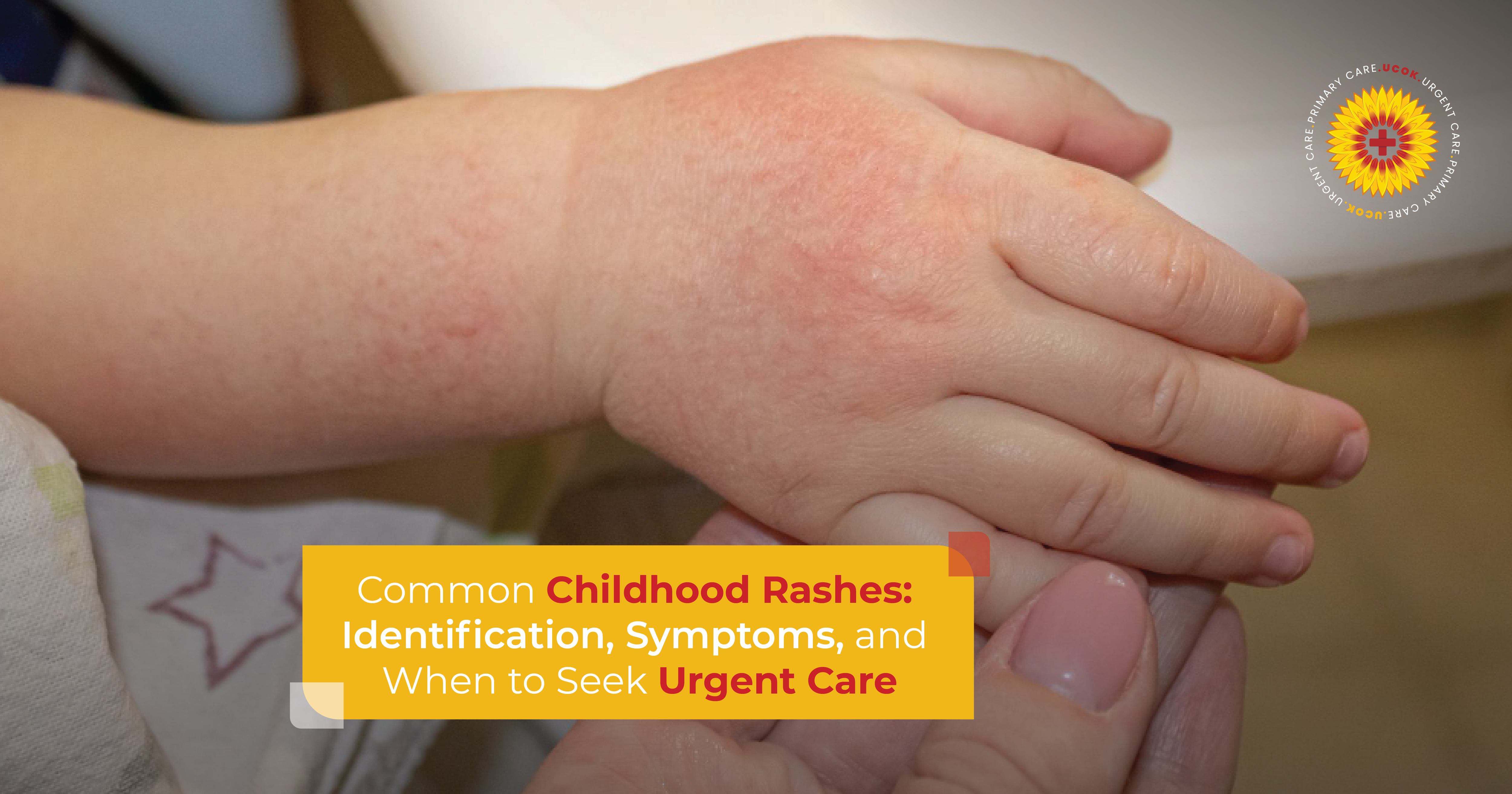
Childhood rashes are among the most common reasons parents visit pediatricians and urgent care centers. While the sudden appearance of red spots, bumps, or blisters can be alarming, most rashes in children are caused by viruses, are self-limited, and resolve without any lasting issues. A smaller number stems from bacterial infections and requires prompt medical treatment.
This guide serves as an easy, practical resource for parents and caregivers. It explains the six most common childhood rashes, the symptoms to look for, when home care is sufficient, and when urgent care is necessary. Understanding these rashes helps families feel more confident, prepared, and less anxious when symptoms appear.
Understanding Childhood Rashes
A rash in childhood is any visible change in the skin color, texture, or pattern in children under 18 years. Most of them are caused by viral infections, which the American Academy of Pediatrics points out as the major cause of rashes among children. These viral rashes, also called viral exanthems, are usually benign.
Less commonly, rashes are caused by bacterial infections, allergies, or environmental triggers. Bacterial rashes often appear more serious and will continue to worsen in a short amount of time if left untreated; thus, the earlier the diagnosis, the better.
Quick Comparison Chart: Common Childhood Rashes
| Rash Name | Cause | Typical Age | Key Symptoms | Contagious? | Usual Duration |
| Chickenpox (Varicella) | Varicella virus | 2–12 years | Itchy red bumps → blisters → scabs | Yes, very | 7–10 days |
| Scarlet Fever | Group A Streptococci | 3–12 years | Sandpaper rash, strawberry tongue, sore throat | Yes | 5–7 days w/ antibiotics |
| Hand, Foot, Mouth | Coxsackie virus | Under 5 years | Mouth sores + spots on hands/feet/buttocks | Extremely | 7–10 days |
| Roseola | HHV-6/HHV-7 | 6 months–3 years | High fever → rash after fever breaks | Yes, before rash | Rash 1–2 days |
| Fifth Disease | Parvovirus B19 | 4–12 years | “Slapped cheeks” → lacy rash | Yes, before rash | Rash 1–3 weeks |
| Measles | Measles virus | Any unvaccinated | Fever, cough, runny nose, red eyes → blotchy rash | Extremely | 10–14 days |
Most Common Childhood Rashes and How Urgent Care Helps
1. Chickenpox (Varicella)
Once extremely common, chickenpox is now less frequent thanks to vaccination, but it still appears in unvaccinated or partially vaccinated children.
Symptoms
- Small red bumps on chest/back/face
- Fluid-filled blisters (“dewdrops on a rose petal”)
- Scabs as blisters dry
Key feature: All three stages appear at once.
Contagious Period
1–2 days before rash until all blisters scab over (5–7 days).
Home Care
- Lukewarm oatmeal baths
- Calamine lotion
- Short nails/cotton mittens to prevent scratching
- Acetaminophen/ibuprofen for fever
- Antihistamines if itching is severe
Seek Urgent Care If:
- Fever >102°F for more than 4 days
- Signs of skin infection (red, warm, pus-filled blisters)
- Blisters near the eyes
- Severe lethargy or stiff neck
2. Scarlet Fever (Group A Streptococcus)
A bacterial infection requires antibiotics to prevent complications.
Symptoms
- Fever, sore throat, headache
- Sandpaper-like rash
- Strawberry tongue
- Pastia’s lines (red creases in folds)
- Rash starts on neck/torso
Treatment
- 10-day amoxicillin or one penicillin injection
Comfort Measures
- Cool, soft foods
- Saltwater gargles (older children)
- Fever and pain control
Seek Urgent Care If:
- Trouble breathing or swallowing
- Fever not improving 48 hours after antibiotics
- Swelling of the neck or face
3. Hand, Foot, and Mouth Disease (HFMD)
Very common in toddlers and preschoolers.
Symptoms
- Fever and irritability
- Painful mouth sores
- Red or blister-like spots on hands, feet, or diaper area
Home Care Relief
- “Magic mouthwash” (Benadryl + Maalox/Mylanta, if pediatrician approves)
- Cold foods, ice pops, smoothies
- Avoid spicy/salty/citrus foods
- Pain relief with ibuprofen/acetaminophen
Contagion
Most contagious the first week; virus sheds in stool for weeks.
4. Roseola (Sixth Disease)
Typical in young toddlers and known for its dramatic fever.
Symptoms
- High fever (103–104°F) for 3–5 days
- Child is often still playful
- Fever suddenly breaks → pink rash on trunk, face, and limbs
Home Care
- Acetaminophen or ibuprofen
- Lightweight clothing, lukewarm baths
- Hydration (breast milk, fluids, Pedialyte popsicles)
Rash resolves on its own within 1–2 days.
- Fifth Disease (“Slapped-Cheek” Rash)
A mild viral illness with a very recognizable rash.
Symptoms
- Bright red cheeks
- Lacy pink rash on arms/legs/trunk
- Rash may recur with heat or exercise
Special Note for Pregnancy
Pregnant women exposed to Fifth disease should contact their obstetrician if not immune.
6. Measles
A severe, highly contagious viral illness that primarily affects unvaccinated children.
Symptoms
- High fever, cough, runny nose, red eyes
- Flat, blotchy rash starting on the face and spreading downward
Contagious Period
4 days before to 4 days after the rash appears.
Home Care
- Hydration
- Fever control
- Isolation until fully recovered
Seek Immediate Medical Care If:
- Difficulty breathing
- Persistent high fever
- Severe dehydration
- Signs of pneumonia or ear infection
Prevention Strategies for Parents and Caregivers
- Stay current on vaccines: Varicella (chickenpox), MMR (measles)
- Teach proper cough etiquette and 20-second hand-washing
- Disinfect toys and surfaces during outbreaks
- Keep sick children home to protect others
When to Seek Professional Help
Go to urgent care immediately if your child has a rash PLUS:
- Stiff neck, severe headache, or light sensitivity
- Purple/bruise-like spots that do not blanch (medical emergency)
- Wheezing, stridor, or breathing difficulty
- Fever >100.4°F (38°C) in infants under 3 months
- Extreme lethargy, irritability, or difficulty waking
- Rapidly spreading rash with dizziness or fainting
Conclusion
Childhood rashes are common, often dramatic, and usually harmless. The urgent-care clinic is well equipped to diagnose bacterial infections and begin timely therapy, while providing reassurance for the viral rashes that require only supportive care. With recognition of classic symptoms, some simple home-care strategies, and current vaccination practices, parents can confidently manage these conditions and keep children comfortable and safe.