
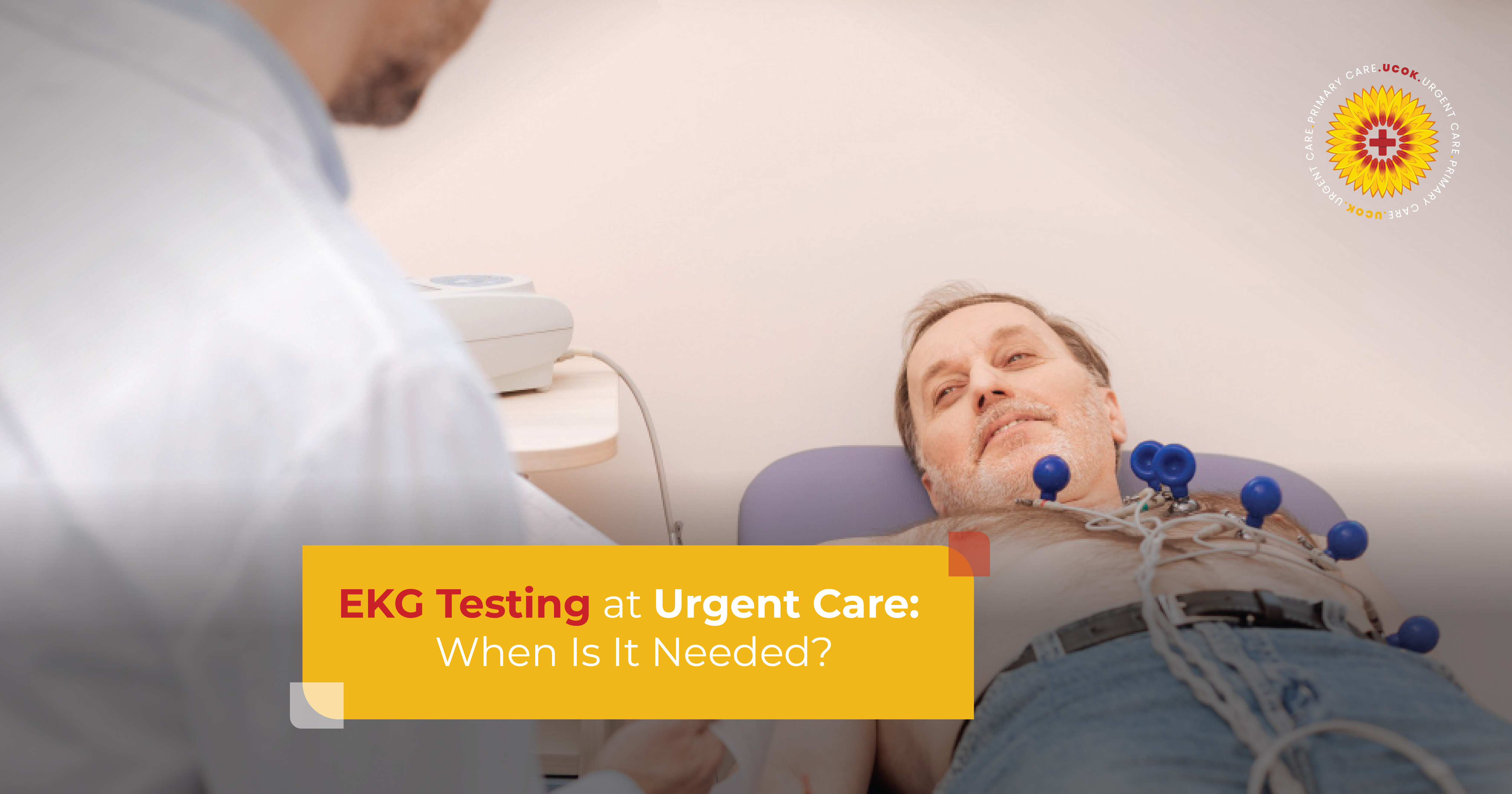
An electrocardiogram (EKG or ECG) is a quick, painless test that looks at the electrical activity of your heart. It tells you a lot about your health because it can find irregular heart rhythms, heart diseases, or a history of heart attacks. Urgent care offers EKG testing that is easier to get to and has shorter wait times than hospitals.
EKG can also be helpful to mental health practitioners. Symptoms of anxiety and panic attacks are likely to be similar to those of the heart, like chest tightness or palpitations. A quick test can rule out any physical problems. If you feel dizzy, have chest pain, or your heart is racing, this guide tells you when you should get an EKG and why it’s better to go to an urgent care center for your screening.
What is an EKG and How Does It Work?
An EKG is a test that measures the electrical impulses your heart sends out. The heart beats because an electrical signal makes the muscles in the heart contract. An EKG records those electrical signals and shows you how your heart beats and works by measuring these signals.
Things you should know about EKG tests:
- It is non-invasive and painless. Electrodes on the chest, arms, and legs pick up signals from the heart.
- It tells real-time information about your heart’s rhythm and rate.
- EKGs can find heart problems, irregular heartbeats called arrhythmias, or heart attacks that happened in the past but don’t show any noticeable signs.
Trained medical staff at urgent care centers quickly read the results and usually give quick advice and information about any follow-up care that may be needed.
Common Symptoms That Indicate You Need an EKG
You might need an EKG (electrocardiogram) if you have some physical signs. Testing is an important step to rule out heart problems and give you peace of mind because these signs are often the same as those of anxiety or stress.
Chest pain or discomfort
If you feel sharp, tight, or heavy in your chest, it could be a sign of heart disease, but it could also just be because you’re very stressed. An EKG can help you figure out if the issue is with your heart or something else, like stress.
Breathlessness and fatigue
Heart rhythm problems can make it hard to breathe, make you feel weak for no reason, or make you very tired. But since these symptoms often happen during panic attacks, an EKG is very important for getting the right diagnosis.
A fast heart rate or heart palpitations
It can be scary when your heart races, flutters, or skips a beat. These feelings are usually caused by anxiety, but they can also be signs of cardiac arrhythmia. An EKG can quickly rule out any issues with the heart’s rhythm.
Feeling lightheaded or dizzy
You might feel dizzy or faint when your heart rhythm is off. Diagnostic tests help find or rule out major heart problems quickly.
Keep in mind that many of these signs are similar to those of anxiety or panic disorders. An EKG gives patients and doctors the information and peace of mind they need to make the best choice for treatment.
Why Choose Urgent Care for EKG Testing?
There are many good things about getting an EKG test at an urgent care clinic:
- Convenience: You don’t have to make an appointment; you can walk in.
- Shorter Wait Time: Unlike most trips to the ER, you can often get tested right away.
- Affordable Care: Most centers accept insurance, and you can also pay for your own care.
- Results on the Same Day: Many urgent care centers have skilled staff who can quickly look at results.
Urgent care can be very helpful for people who are having mental health problems. You can get a quick evaluation in a calm, supportive setting if you’re feeling anxious, having panic attacks, or having any physical symptoms.
Comparison at a Glance
| Feature | Urgent Care | ER | Primary Care |
| Wait Time | Short | Long | Varies |
| Appointment Needed | No | Usually no | Often yes |
| Cost | Affordable | Higher | Moderate |
| EKG Availability | On-site | On-site | Often requires referral |
| Ideal for Mental Health Evaluation | Yes | Less tailored | Possible, but slower |
When to Get an EKG at Urgent Care
EKGs, or electrocardiograms, are a good way to check on your heart health. An urgent care doctor usually recommends this test when:
1. Evaluating Chest Pain and Palpitations
If you have chest pain that doesn’t have a clear cause, a racing heart, or sudden palpitations, you need an EKG. This test helps rule out any heart problems that might happen soon and figure out what caused the problem.
2. Screening for High-Risk Factors
The importance of preventative screening is in the case of patients with known risk factors. In case you have high blood pressure, high cholesterol, diabetes, or any heart diseases that are inherited in your family, an EKG might help to report possible troubles before these problems turn into emergencies.
- Medication and Pre-Procedure Clearance
The prescribed medications may affect the heartbeat rate. Urgent care providers regularly carry out EKGs to make sure that you are safe, as you start a new treatment regimen or go through a particular medical procedure.
4. Distinguishing Anxiety from Heart Issues
Panic attacks and anxiety disorders can have similar symptoms to those of heart problems. An EKG gives it clarity as it will help distinguish between symptoms that are caused by stress and signs of real cardiac events, and it is a relief to the patient and provider.
- Next Steps and Referrals
In case there are any abnormalities in your EKG, you will be advised on how to proceed by the team of urgent care. This will usually include a referral to a cardiologist or a request for further testing so that you are provided with full care.
What to Expect During an EKG at Urgent Care
The EKG method is simple and doesn’t hurt:
- Patients take off their clothes from the chest area so that electrodes can be placed.
- Electrodes are put on the arms, legs, and chest.
- The test is approximately 5-10 minutes, and it is painless, and discomforts are not noticed.
- Doctors and nurses look at the results right away.
Tips for Patients:
- Put on loose, comfortable clothes so that the electrodes can be put on easily.
- Don’t drink coffee or work out a lot right before the test.
- Let staff know about any medications or mental health problems that could impact the results.
Cost, Insurance, and Accessibility
Unexpectedly, an EKG in urgent care is usually cheaper than in hospitals. Most of the centers take the major insurance plans, and those who do not have insurance can also pay using self-pay.
After the EKG: Understanding Your Results
The results can be normal, abnormal, or not clear:
- Normal Results: This means that there are no immediate problems with the heart.
- Abnormal Results: May lead to a referral to a cardiologist or more tests, like a stress test or echocardiogram.
- Results that aren’t clear: More testing may be needed to get a clear answer.
At the urgent care, EKG tests are a viable, quick, and effective method of assessing heart health. It is particularly helpful when a person has symptoms that are similar to the mental health issue, i.e., anxiety or panic attacks.
The staff explains the results in a way that is easy for patients to understand. If you have a mental health condition, knowing that your heart is healthy can help you feel less stressed and anxious.
Conclusion
EKG tests at urgent care are a quick, easy, and accurate way to check the health of your heart. It is especially helpful for people who have symptoms that are similar to those of mental health disorders, like anxiety or panic attacks that make their chest hurt. As part of our full range of urgent care services, we at Urgent Care of Kansas offer easy EKG testing. Urgent care centers help patients make smart choices about their health by giving them quick information and peace of mind.
If you or someone you care about has chest pain, palpitations, or other symptoms, come in today or make an appointment for an EKG to put your mind at ease.
FAQs
What is the difference between an echocardiogram and an EKG?
An echocardiogram uses sound waves to make pictures of the heart’s structure, while an EKG measures electrical activity.
Can an EKG tell if someone is having a heart attack?
Yes, an EKG can show changes in heart activity that mean a heart attack is happening or has happened.
How long does it take to get an EKG at urgent care?
The procedure usually takes 5 to 10 minutes, and results are often available right away.
Is it safe for kids and older people to have EKG tests?
Of course. EKGs don’t hurt, don’t require any cutting, and are safe for people of all ages.
Can stress or worry change the results of an EKG?
Stress can cause short-term changes in heart rate, but trained staff can still read an EKG.