
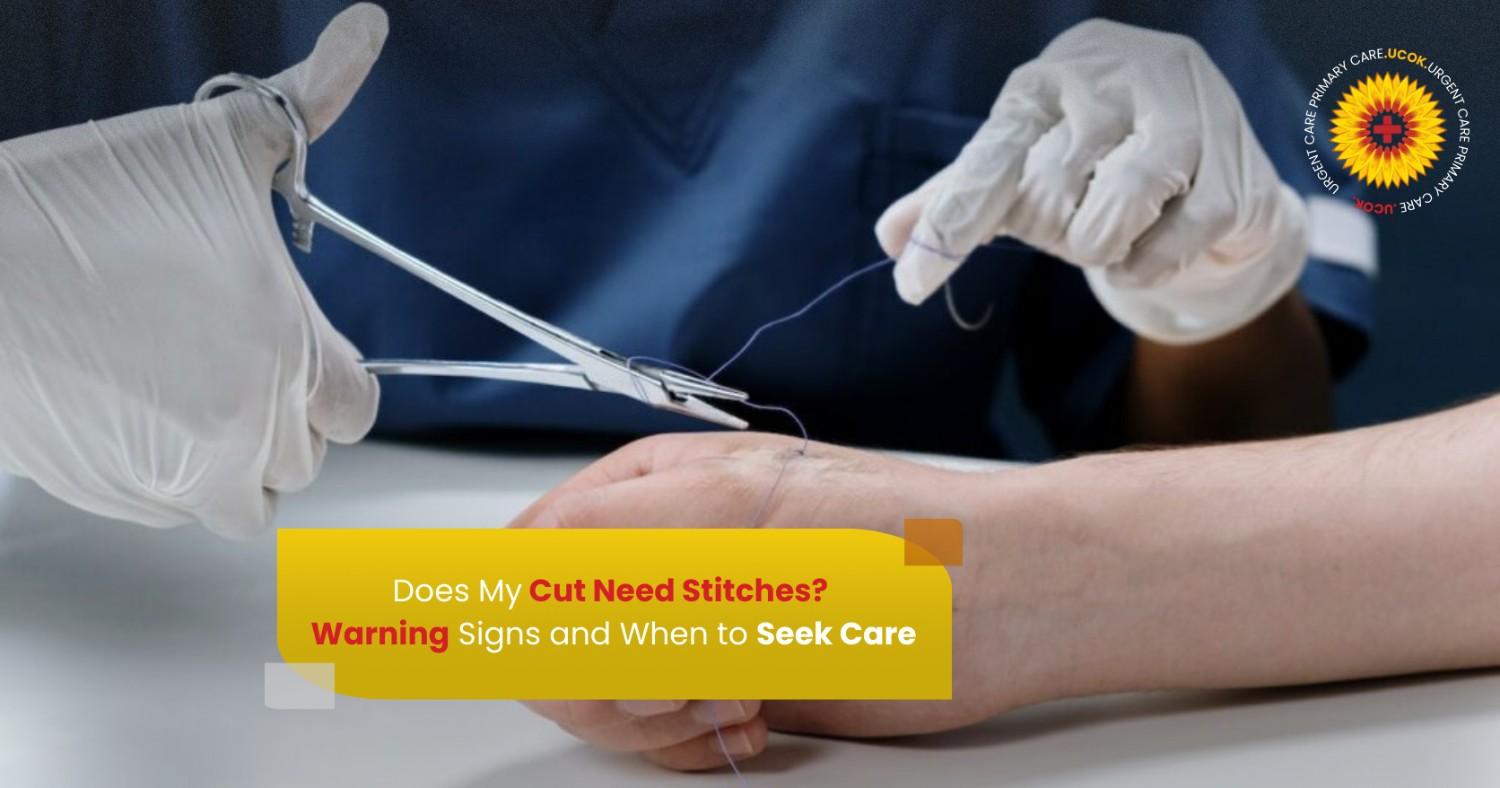
Accidents happen all the time, like when you drop something in the kitchen or fall on the playground. But when is a bandage not enough? It’s essential to know how to tell if a wound needs stitches so you don’t get an infection and the scar doesn’t get too big. This guide explains the most important first-aid steps, the main warning signs, and when to see a doctor.
Quick Checklist: Signs a Cut May Need Stitches
Just go through this quick list first:
- The cut is deep or gaping open
- Blood loss does not cease after 10 minutes of constant pressure
- You can see fat, tissue, or bone
- The cut measures over half an inch
- The cut is on the face, hands, or feet, or above a joint
- The wound is filled with dirt or debris
- An animal bite and a rusty object caused the accident
If any of these symptoms appear, it is better to have the wound examined. Keep reading below for a deeper explanation and precisely what to do next.
Types of Cuts: Which Ones May Need Stitches?
You don’t need to go to the ER for every cut, but it’s essential to know the difference between a minor scrape and a big cut so that it heals properly. This is how to tell which cuts might need stitches.
- Superficial wounds only hurt the epidermis, which is the top layer of skin. For these shallow wounds (less than 2mm deep), basic home first aid usually works well.
- Deep lacerations extend through the dermis or fatty tissue. Cuts that are:
- More than 1.2 cm (½ inch) long
- More than ¼ inch (6 mm) deep
- Bleeding heavily or gaping open
- Even though puncture wounds from nails or other sharp objects may not seem serious, they are very likely to get infected because they are so deep.
Minor cuts usually heal on their own, but deep cuts often require stitches from a doctor to prevent infection and reduce scarring. Always ask a doctor or nurse if you’re not sure.
Key Warning Signs That Your Cut Might Need Stitches
Does that injury require medical care? The following is a quick guide to help determine whether a wound needs stitches.
- The Cut Is Deep or Gaping
The wound is too broad, appears deep, and the edges are failing to remain closed, thus requiring medical attention. If you notice yellow fatty tissue or muscle layers, go to urgent care before it is too late. The jagged edges are also indicators that the skin would not heal naturally.
- Bleeding Won’t Stop
Apply steady pressure for 10 minutes. When the bleeding continues and blots through several bandages or rhythmically spurts out, you may have a ruptured blood vessel. This needs treatment by professionals.
- It’s in a Sensitive Area
Some places need stitches to heal correctly and leave as few scars as possible. Get help for cuts on your:
- The face, especially the area around the mouth and eyes
- Hands or fingers
- Toes
- Joints
- High Risk of Infection
Rusty metal, animal bites, and other contaminants can cause wounds that are likely to become infected. If you can’t get the debris out yourself, you need to see a doctor to clean and close the wound properly.
When You May Need a Tetanus Shot
You may need a tetanus shot if any of the following are true:
- The wound is dirty or deep
- The injury has to do with metal, dirt, or something outside
- You haven’t had a tetanus shot in more than five years
A provider can tell right away if a booster is needed.
Immediate First Aid Steps Before Deciding on Stitches
Start with basic first aid if the injury isn’t too bad:
- Carefully rinse the cut with clean, running water.
- Wash the skin around the area with mild soap.
- To stop the bleeding, press down hard.
- Cover it with a clean bandage.
While you decide if you need to see a doctor, these steps help keep the wound stable.
When to Seek Professional Care
The Best Timing for Stitches
For the best results, most wounds need stitches within 6 to 12 hours. Cuts on the face are different because blood flows well, so doctors can usually treat them up to 24 hours after they happen.
Risks of Waiting Too Long:
- More likely to get an infection
- Difficulty closing the skin
- More likely to get scars that last forever
If you’re not sure if you’ve missed the window, see a doctor right away.
Urgent Care vs Emergency Room: Where Should You Go?
Go to urgent care if:
When to go to urgent care for stitches:
- The bleeding is under control, but the wound may need stitches.
- The cut isn’t too deep.
- You need to be cleaned, closed, or evaluated.
Go to the ER if:
- Bleeding won’t stop.
- Bone is visible.
- It experiences numbness or reduced movement.
- The injury is significant or severe.
Non-life-threatening injuries are relatively less costly and quicker in urgent care clinics.
What Happens During a Visit?
Some of the treatments that could be used are:
- Making the wound clean and numb
- Tape, medical glue, or stitches
- Instructions for bandaging and aftercare
Many patients are surprised by the fact that the procedure of stitching is often fast and easy, and numbing medication alleviates pain.
How Long Do Stitches Stay In?
This depends on the location:
- Face: about 5 days
- Scalp: 7–10 days
- Arms and legs: 7–14 days
- Joints: up to 14 days
Follow the instructions of your provider.
Preventing Future Cuts and Helping Wounds Heal
You can lower your chances of getting hurt by:
- Putting sharp tools away in a safe place
- Putting on gloves when needed
- Keeping an eye on kids, also making sure sharp things are out of reach
- Rounding off sharp corners on furniture
For healing:
- Make sure the cut is clean and dry
- Stick to the removal dates
- Look for signs of infection
- Use gentle moisturizers later to soften scars
Conclusion
Getting cuts and scrapes is normal, but knowing the warning signs of deep wounds, bleeding that won’t stop, contamination, and high-risk areas can help you decide when to see a doctor.
If you’re not sure if a cut needs stitches, it’s usually best to get it checked out. Urgent Care of Kansas has walk-in wound care, quick treatment, and cheap options to help you heal quickly and safely.
FAQs
Can urgent care treat deep cuts?
Yes. Laceration repair, suturing, and wound assessment are routinely performed in urgent care clinics.
Do stitches hurt?
Most patients only feel a little pain because the area is numbed before treatment.
What if a stitched wound looks infected?
Watch for redness, swelling, warmth, pus, or fever. Consult immediately in case they appear.
Are there alternatives to stitches?
Yes. Depending on the wound, medical glue, adhesive strips, or staples can be applied.