
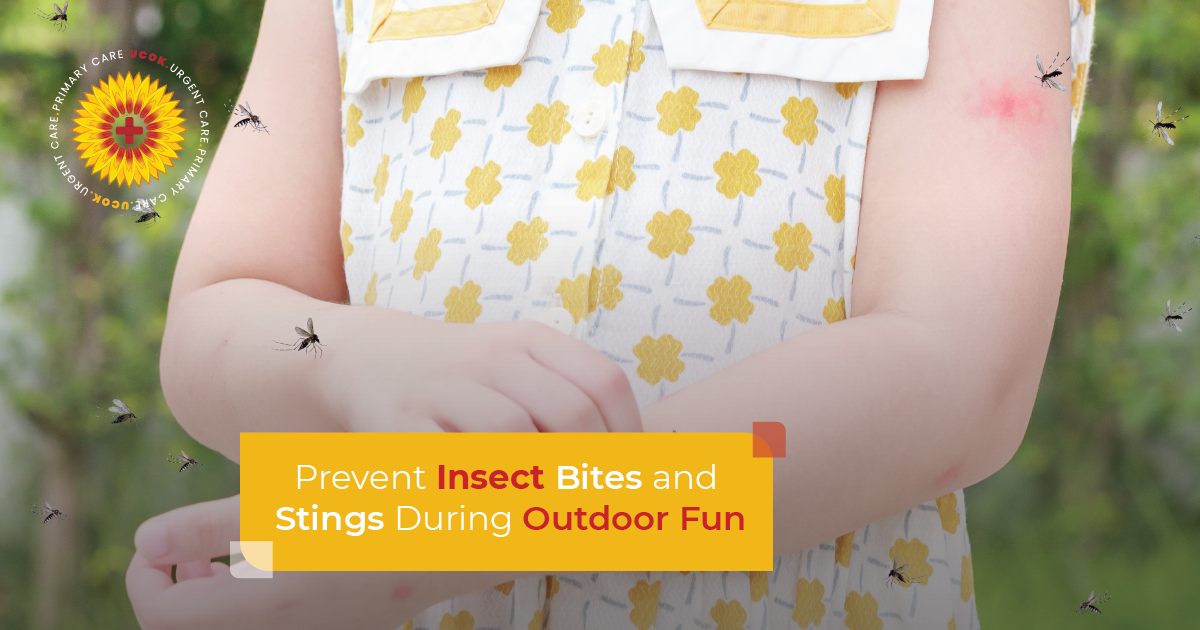
Spending time outdoors means running into insects.
Bites and stings can happen if you’re hiking, camping, or relaxing in your backyard.
At Urgent Care of Kansas, we see patients with insect-related injuries and allergic reactions, especially this summer season.
Let’s talk about the ways you can avoid them.
Prevention Strategies
What You’re Dealing With
Various insects can act differently. Being familiar with their ways can ensure you avoid them.
- Mosquitoes can live in stagnant water and are active in the morning and evening hours
- Bees and wasps go after bright colors, sweet smells and sugary drinks
- Ticks are present in tall grass, wooded spots, and leaf piles
- Fire ants get aggressive when you disturb their nests
- Flies show up around food and trash
- Chiggers live in grassy areas and grab onto your clothes
What to Wear
Your attire can prevent insects from getting on your body.
- Light colored, long sleeves and pants are advised
- Tuck pants into socks in tick areas
- Avoid the use of bright colours and floral patterns
- Wear covered shoes rather than sandals
- Apply permethrin to your clothes to have an added measure of protection
- Wear a hat to protect your neck and head
Insects have to find it harder to detect light colors. Free-fitting clothing is more difficult to be bitten into.
Using Repellent
The appropriate repellent keeps the bugs off your skin.
- Purchase EPA-approved repellents containing DEET, picaridin or lemon eucalyptus oil
- Put repellent on after sunscreen
- Follow the label for when to reapply
- Use gentler formulas for kids over two months
- Try natural options like citronella for light protection
- Don’t spray on cuts or scrapes
You don’t always need the strongest DEET. Something with 10-30% works fine for most trips outside.
Making Your Space Less Appealing
Small changes around your outdoor space will keep the insects at bay.
- Eliminate areas with standing water where the mosquitoes breed
- Keep trash cans closed and clean
- Use fans on patios – most insects can’t handle the breeze
- Plant herbs like basil, mint, and lavender
- Light citronella candles in the evening time
- Keep grass and bushes trimmed
- Clean up fruit that falls from trees
Check weekly for standing water in pots, gutters, and other containers. Even a little bit can attract mosquitoes.
Food and Drinks
Eating outside needs a bit more planning.
- Cover food until you’re ready to eat
- Use containers with tight lids
- Clean up spills quickly
- Don’t leave sweet drinks sitting out
- Look in your drink before taking a sip
- Keep trash away from where you’re eating
Sweet stuff brings bees and wasps around. Keep these covered or inside until you need them.
Different Activities
Each outdoor activity has its considerations:
- Hiking: Long pants, repellent, stick to trails
- Camping: Set up away from water, use mesh tents, and seal your food
- Gardening: Wear gloves, check for nests first
- Picnics: Cover food, clean up fast, skip strong perfumes
When Bites and Stings Happen
Taking Care of It Right Away
Quick action helps when something gets you.
- Scrape stingers out with a credit card – don’t squeeze
- Wash with soap and water
- Put ice wrapped in a cloth on the swelling
- Use calamine lotion or antihistamines for itching
- Take pain medicine if you need it
- Keep the spot clean and dry
The majority of the bites and stings improve after several days. Some people have a strong reaction and require assistance.
When to Get Help
Sometimes you need to see someone even if you’ve done everything right. Look for:
- Allergic reactions such as widespread swelling, difficulty breathing or a racing heart
- Numerous stings or bites in large regions
- Infection signs, such as increased redness, elevated temperature, or pus
- Pain or swelling that is continually increasing
- Fever or feeling sick after tick bites
- Bites that don’t get better after a few days
If you can’t breathe or swallow properly, don’t wait.
Getting Professional Help
Professional medical care makes sense if you have bad reactions or worrying symptoms.
Healthcare facilities like Urgent Care of Kansas can treat immediate problems and provide ongoing support for insect-related injuries and allergic reactions.
We can also help with seasonal allergies and treatment plans.
Visit us online or walk in today.
FAQs
How much time does it take before a bite is healed?
The majority of the bites get better in one to two days. Seek assistance in case the symptoms worsen and when new ones develop.
Do natural repellents compare favorably to the artificial ones?
All-natural repellents assist in protecting people but they typically require frequent application compared to DEET-containing products.
Is it possible to get immune to insect bites?
Some individuals learn to become less sensitive to allergies, but serious cases of allergies should be addressed immediately at all costs.
Should I pop blisters from insect bites?
No, this makes infection more likely. Keep blisters clean and covered instead.