
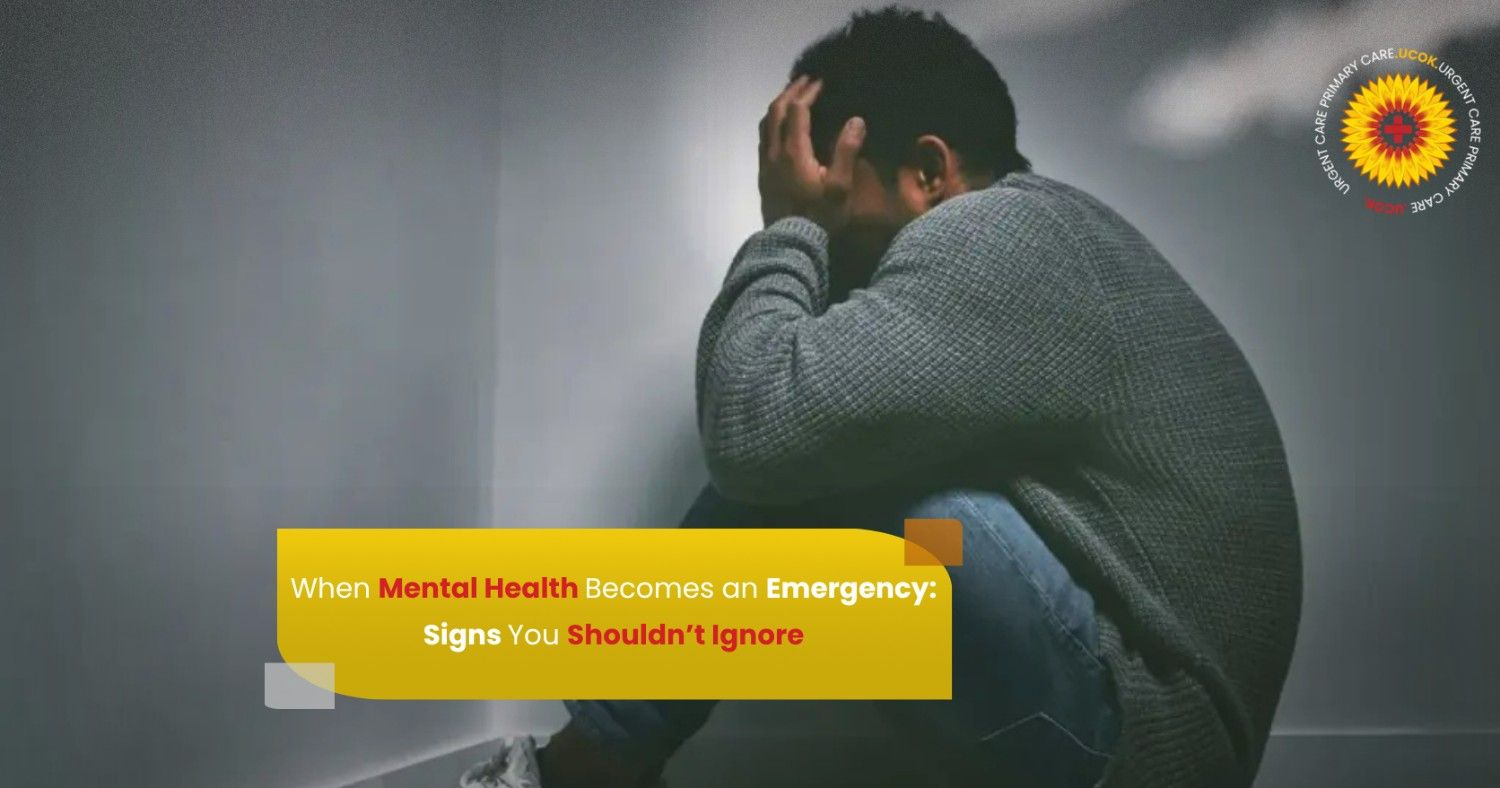
Picture a normal night in a home: dinner is ready, but your teen hasn’t left their room in hours. Or maybe you’re the one who can’t sleep in the early morning, your heart racing, and the weight of your duties on your mind. Most of the time, stress is easy to handle. But occasionally those feelings turn into something worse that needs to be dealt with right away.
This guide can assist families in telling the difference between a difficult day and a mental health emergency. You’ll discover clear, practical indications that you shouldn’t ignore, what to do right away, and how Urgent Care of Kansas and its Mental Health Center can help you when you need it most.
Knowing when to intervene can keep your loved ones safe and stop things from getting worse.
Understanding Normal Stress vs. a Mental Health Emergency
Everyday Pressures Families Face
Stress is something that every family goes through. Deadlines for school, busy schedules, hard workdays, and money problems can all add up over time. In Kansas City, the weather can also affect how you feel and how much energy you have.
These things happen in life. Just because you’re weary, angry, or emotionally depleted doesn’t imply something is wrong. In a lot of cases, these sentiments get better with rest, help, and healthy ways to deal with them.
The most important thing is how strong these feelings are and how much they get in the way of everyday living.
When It Crosses the Line
Stress from ordinary life is not the same as a mental health emergency. When a person’s ideas, feelings, or actions start to make it hard for them to be safe or do everyday things, this is what happens.
At this point, a person might:
- Think they can’t handle it
- Can’t control your feelings
- Be in danger of hurting themselves or other people
You shouldn’t wait for this to pass. Being aware of this change early on can make a big difference.
Key Signs You Shouldn’t Ignore
Thoughts That Signal Immediate Danger
Some situations need to be taken seriously immediately:
- Saying they wish to die or go away
- Saying they feel like a burden
- Saying that they don’t think things will get better or that they are hopeless
Even simple things might show how much agony they’re in. They need help right away.
Sudden or Severe Changes in Behavior
Changes in behavior are often early warning signs:
- Staying away from family and friends
- No longer being interested in things that used to be fun
- Having trouble with simple things like getting out of bed or eating
- More anger, bewilderment, or strange behavior
- Giving away things or saying goodbye in small ways
For kids and teens, this could look like:
- Refusal to go to school
- Very big changes in mood
- Acting on impulse or taking risks
Physical Symptoms That May Point to a Mental Health Crisis
Your mental and physical health are strongly linked. Emotional distress can manifest physically, including:
- Tightness in the chest or a fast heartbeat
- Not being able to breathe well
- Extreme tiredness
- Insomnia that keeps coming back
- Not being able to think clearly, being disoriented, or feeling disconnected
These symptoms can seem like a medical emergency, which is why it’s so vital to be checked out.
What to Do When You Spot These Signs
Immediate Steps for Safety
If you’re concerned about someone:
- Stay calm and in the moment
- Ask them straight out, “Are you thinking about hurting yourself?”
- If it’s safe to do so, get rid of imminent threats
- Ask for help
You can call the Suicide & Crisis Lifeline (988) at any moment for help right now.
Deciding Where to Go for Help
It can be hard to know where to go.
- Go to the ER if you are in urgent danger or at risk of getting hurt
- Go to urgent care if the situation is serious but not life-threatening
You can get a quick evaluation and guidance on deciding what to do next at urgent care.
Urgent Care vs. the ER: A Practical Family Guide
When Urgent Care May Be the Right First Step
When you need care right away, urgent care is a great choice.
- Anxiety or panic feels too much to handle
- Depression is getting in the way of normal living
- You need treatment for medical issues right away
- You want an evaluation the same day, without having to wait long
At Urgent Care of Kansas, doctors look at both physical and emotional issues and help patients get the correct care.
When the Emergency Room Is Necessary
Pick the ER if there is:
- Danger to oneself or others right away
- An overdose or a really bad injury
- Serious health problems
When in doubt, safety should always come first.
Urgent Care of Kansas Mental Health Center: Integrated Support
At Urgent Care of Kansas, mental health is a big part of overall health. Our Mental Wellness Center uses a connected, patient-centered approach that is good for both mental and physical health.
Help with the following is part of the service:
- Worry and fear
- Concerns about mood and depression
- Stress and exhaustion
- Insomnia
- Having trouble paying attention and staying focused
Patients get the following benefits:
- Evaluations on the same day or on time
- Care that looks after both your body and mind
- Easy-to-use telehealth options
- Care plans that are made just for you
- Long-term assistance
This method makes sure that families get care that is complete and coordinated.
How Mental Health Support Helps Families
Getting care on time can make a big difference.
At Urgent Care of Kansas, the focus is on:
- Ask about your medical history and review your symptoms
- Creating a safe place where people don’t judge each other
- Making the next steps clear
- Connecting patients to ongoing care, like therapy, coping skills, and medication if they need it
The goal is clear: to find stability, clarity, and a way to move on.
Helping Your Family Build Resilience Before a Crisis
It starts at home to help with mental health:
- Get people to talk about their feelings openly
- Early on, pay attention to subtle changes in behavior
- Make a short support plan that includes trusted people to talk to and ways to calm down
- Keep up with your routines (sleep, food, and exercise)
Small things you do every day can stop bigger problems from happening.
Conclusion
Mental health emergencies can be quite scary, but if you know the signs early on, you can respond with care and confidence.
Urgent Care of Kansas and its Mental Health Center can help families when they need it most. There is help available, whether you need to talk to someone right away or get advice on what to do next.
Don’t delay if you or someone you care about is displaying signs of trouble. Getting in touch can make a big difference.
You have already taken the first step by knowing more. The next step could help protect someone’s safety and may even save their life.
FAQs
When is mental health considered an emergency?
When someone could hurt themselves or others, can’t function, or is in a lot of pain or distress.
Can urgent care assist with panic episodes or anxiety?
Yes, urgent care can check out your symptoms, provide you with some early help, and tell you what to do next.
Does Urgent Care of Kansas help people with mental health issues?
Yes, through its Mental Health Center, which offers integrated care and telehealth services.
Can mental health cause physical symptoms?
Yes, worry and anxiety can make your chest feel tight, make your heart race, make you tired, and make it hard to breathe.