
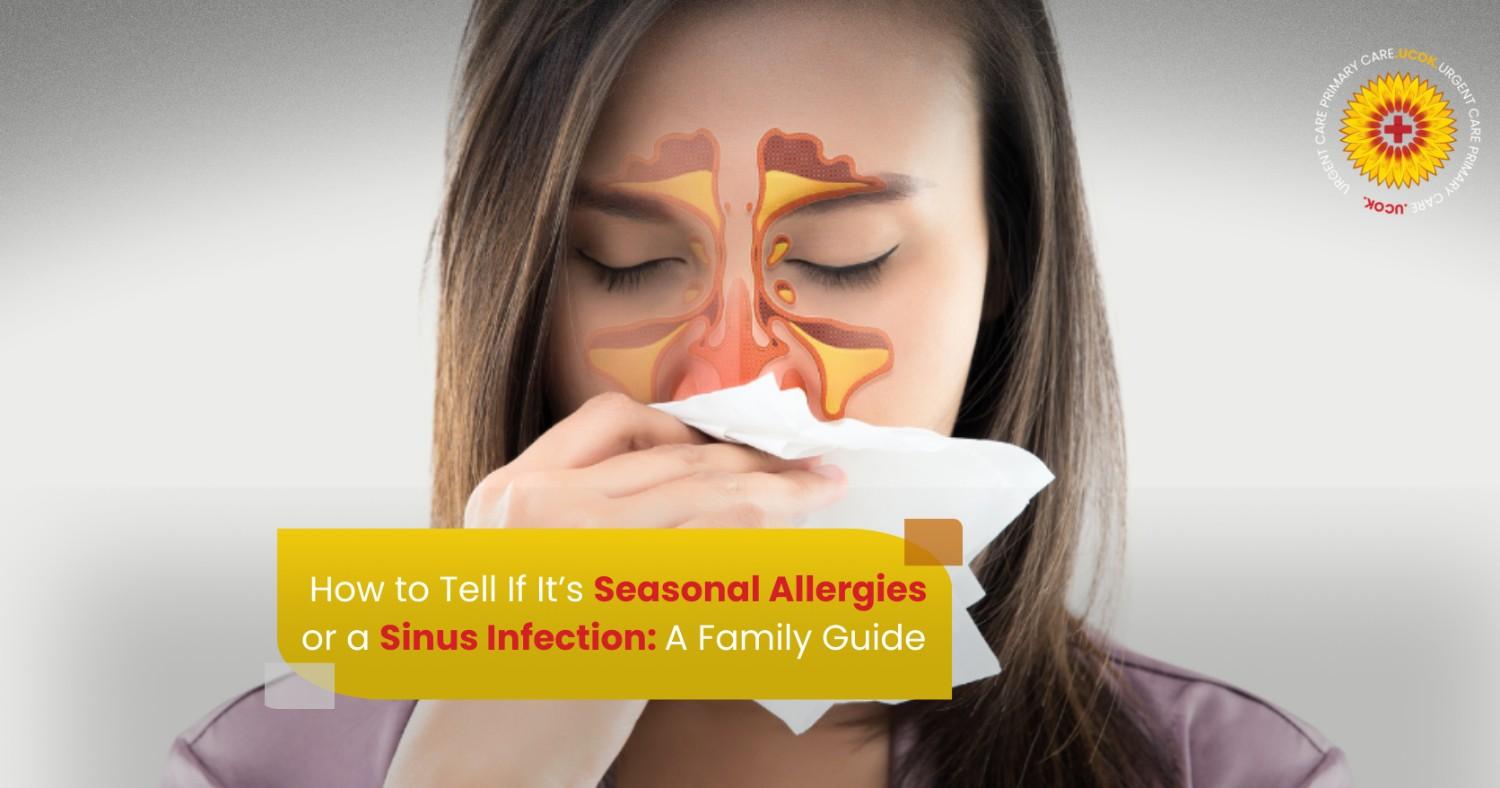
A lot of people get stuffy noses, headaches, and sneezes when flowers bloom, and pollen fills the air. But is it a sinus infection or seasonal allergies? To get better, you need to know the difference. It’s hard to tell what the real cause is because seasonal allergies and sinus infections have similar symptoms. A wrong diagnosis can make you feel worse and affect your mood, focus, and overall health.
This guide will help you tell the difference between seasonal allergies and sinus infections, know when to visit a doctor, and learn how to keep your family’s health safe.
Understanding Seasonal Allergies
What Causes Seasonal Allergies?
Seasonal allergies happen when your immune system reacts too strongly to normal things in the environment. Some of these could be:
- Pollen from trees, weeds, or grasses
- Mold spores
- Dust mites
- Pet dander
These allergens usually only show up in the spring and fall, but indoor triggers can last all year. Kids may have symptoms like sneezing and watery eyes, while adults may feel tired and mentally foggy.
Common Symptoms of Seasonal Allergies
- Watery and itchy eyes
- A lot of sneezing
- Clear, runny discharge coming from the nose
- A tickling or irritation in the throat
- Tiredness without a fever
Some of the symptoms that occur as you spend some time outdoors or as the weather changes. Spring and fall are the worst months for allergies with high levels of allergens like tree, grass, and weed pollens.
Related:
- How Long Do Seasonal Allergies Last?
- 5 Signs It’s Time to Seek Professional Help for Your Seasonal Allergies
Understanding Sinus Infections (Sinusitis)
What Is a Sinus Infection?
Sinusitis is when the spaces around the nose and eyes become inflamed. It usually happens because of:
- Viral infections, like the common cold
- Infections caused by germs
- Inflammation due to allergies
Sinus infections can be mild to severe and last for seven to ten days or longer.
Common Symptoms of Sinus Infections
- Mucus that is thick and yellow or green in the nose
- Pain or pressure in the face, especially on the forehead and cheeks
- A headache that won’t go away
- A low-grade fever or feeling tired
- Not as good at smelling things
- Symptoms getting worse after a cold
Sinus infections can also change how a family works. If one family member is sick, the germs can spread to other family members.
Key Differences: Allergies vs Sinus Infection
| Symptom | Seasonal Allergies | Sinus Infection |
| Nasal discharge | Clear, watery | Thick, yellow/green |
| Sneezing | Frequent | Occasional |
| Itchy eyes/throat | Common | Rare |
| Fever | None | Sometimes present |
| Facial pain/pressure | Mild or absent | Common, worsens when bending forward |
| Duration | Weeks, seasonally | 7–10 days (viral), longer if bacterial |
| Trigger | Environmental (pollen, dust) | Often follows a cold or an infection |
Tip: Observe how symptoms respond to antihistamines; quick relief usually points to allergies.
Step-by-Step Guide to Differentiating
- Track Duration and Onset
- Allergies: The symptoms begin abruptly, in most cases, outside.
- Sinus infection: The symptoms accumulate slowly, in most cases following the cold.
- Assess Symptom Severity and Location
- Allergy signs: Sneezing; itch in the eyes and the nose.
- Signs of sinus infection: Facial pain, pressure, or headache.
- Monitor Response to Home Remedies
- Nasal sprays and antihistamines alleviate the symptoms of allergy rapidly.
- If there is only a slight improvement, it may be a sign of a sinus infection.
- Consider Contributing Factors
- Recent colds, exposure to allergens, or a prior history.
- Mental Health Awareness: Anxiety can make symptoms seem worse than they are.
When to Seek Professional Care
Red Flags Requiring Medical Attention
- A fever that lasts for more than a few days and is higher than 101°F
- Severe swelling of the face or problems with vision
- Symptoms that last longer than 10 days or get worse
- Kids who have trouble breathing or are more tired than usual
Medical Evaluation Benefits
- A correct diagnosis (allergy tests, nasal swabs, and imaging if needed)
- Early treatment stops problems from getting worse
- Advice that focuses on the family is good for both mental and physical health
Prevention and Management Strategies
Preventing Seasonal Allergies
- Check the pollen levels in your area and stay inside when they are high.
- Use air purifiers and keep the inside of your home clean.
- Eat fruits and vegetables and other foods that fight inflammation to boost your immune system.
Preventing Sinus Infections
- Drink a lot of water and use a humidifier to keep your sinuses moist.
- Wash your hands a lot to avoid getting viral infections.
- Quickly treat allergies so they don’t lead to sinus infections.
Home Remedies for Relief
- Eucalyptus or herbal oil steam inhalation.
- Saline nasal rinses
- Remedies should be combined with relaxation methods (guided imagery, deep breathing) to lessen the stress level and enhance the feeling of comfort.
How Urgent Care of Kansas Can Help
If you’re not sure if you have seasonal allergies or a sinus infection, Urgent Care of Kansas can help you quickly and in a way that works for your whole family.
- Evaluation on the same day: You can either walk in or make an appointment to get a correct diagnosis.
- Effective treatment: Medicines, allergy relief, and treatment for bacterial sinus infections when they happen.
- Family and kids care: Help for people of all ages, with tips on how to deal with symptoms at home.
Don’t wait for your symptoms to get worse; see a doctor right away for good care.
Conclusion
To know the difference between seasonal allergies and sinus infections, you need to:
- Track symptom onset
- Observe the severity and the location
- Observe response to home treatment
- Take into consideration personal and family health history
If you notice the problem early, you can get the help they need and avoid more discomfort. Urgent Care of Kansas can help you feel better with immediate care if you’re not sure.
Remember that taking care of your symptoms right away will not only make you physically healthier, but it will also lower your stress, help you sleep better, and improve the physical and mental health of everyone in your family. Don’t wait; listen to your body and get the help you need.
FAQs
Can allergies turn into a sinus infection?
Yes, allergies that block your sinuses can sometimes cause other problems.
How long do sinus infections stay around?
In most cases, viral infections go away in 7 to 10 days, but bacterial infections can last longer.
Is it possible for kids to have both allergies and sinus infections at the same time?
Yes, it’s normal for people to have more than one condition at the same time, especially during seasonal peaks.
When should I see a doctor?
If the symptoms last longer than a week, get worse, or include a fever, swelling of the face, or trouble breathing.