
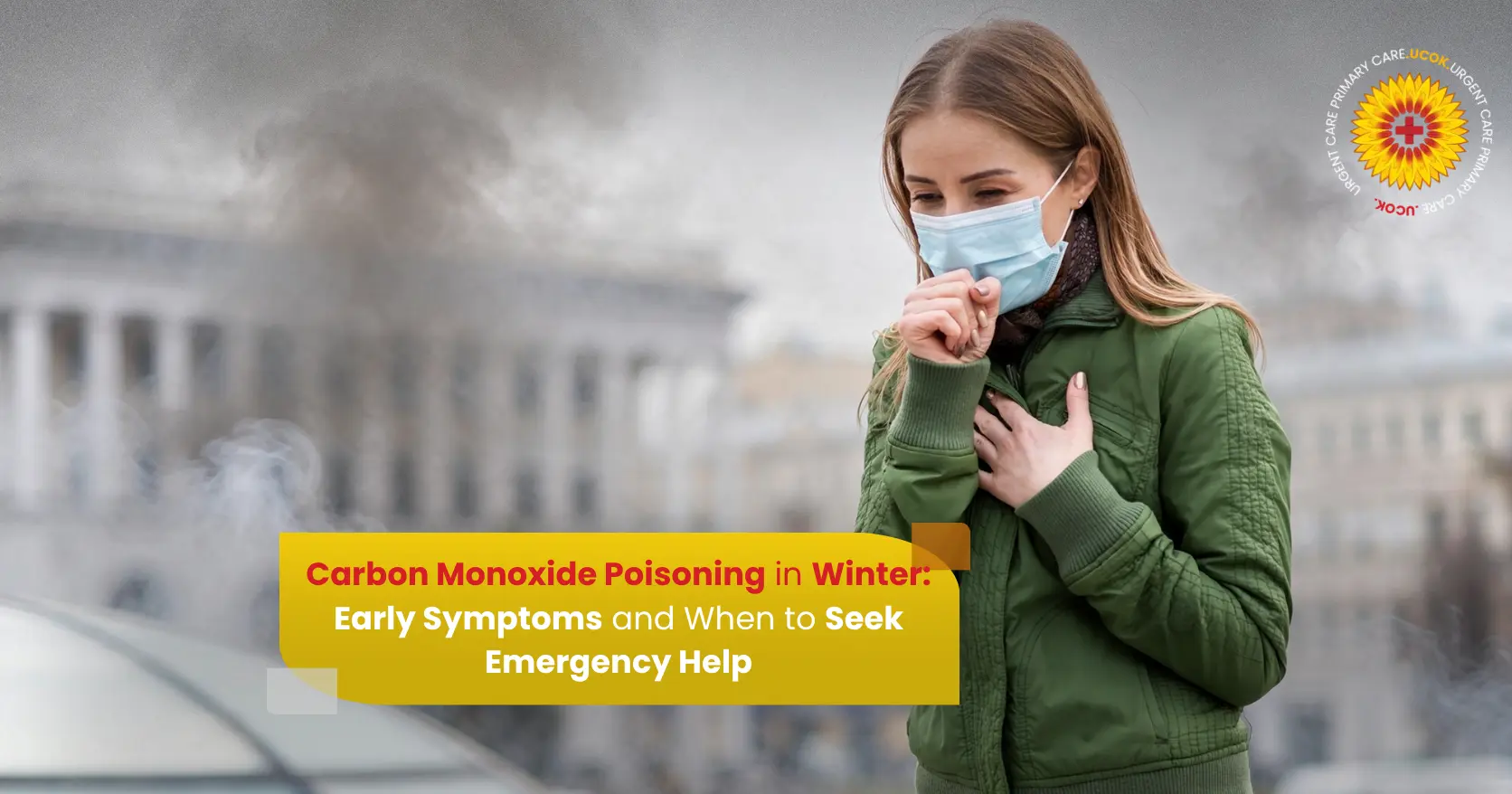
There is a reason carbon monoxide is known as the “silent killer.” It is a colorless, odorless gas that can accumulate in an indoor environment without warning and often has symptoms similar to a typical cold or flu. Winter brings higher risk because dwellings are sealed tight against the cold, heating systems run more often, and portable heaters or generators might be employed.
If you can recognize the warning signs early on and know when to act, it can be the difference between success and failure. At Urgent Care of Kansas, we want families to know the risks of carbon monoxide (CO) exposure and how to act fast to protect themselves. In this post, we examine why winter increases the danger, what symptoms to look out for, what to do immediately, and when to call emergency services.
Why Carbon Monoxide Risk Rises in Winter
Several things can make carbon monoxide buildup more likely during colder months:
- Increased use of furnaces, boilers, and space heaters
- Windows and doors closed, limiting fresh air circulation
- More fireplaces, wood stoves, and generators may be used
- Sometimes vehicles are left running in attached garages to warm up
- Vents or chimneys might be obstructed by snow, ice, or debris
Any device or piece of equipment that burns fuel (gas, oil, wood, propane, or charcoal) can emit carbon monoxide if it is not working properly or is used in a poorly ventilated area. The gas has no scent or color, so individuals often don’t know they are being exposed until they start experiencing symptoms.
Early Symptoms of Carbon Monoxide Exposure
The initial symptoms may be mistaken for a mild sickness. Early signs:
- Head discomfort
- Feeling lightheaded or dizzy
- Nausea and vomiting
- Exhaustion or unusual tiredness
- Trouble breathing
- Confusion or problems concentrating
- Flu-like symptoms without fever
These symptoms may vary or get worse when you are indoors and improve when you go outside. If more than one person in the household (or pets) is feeling ill at the same time, then carbon monoxide should be seriously investigated. A key clue is symptoms that become better after leaving the building.
More Serious Warning Signs
As exposure continues or levels rise, symptoms can become more severe:
- Chest pain
- Severe headache
- Significant confusion or disorientation
- Loss of coordination
- Blurred vision
- Seizures
- Loss of consciousness
At this stage, carbon monoxide poisoning is a medical emergency. Immediate action is required.
What to Do If You Suspect Carbon Monoxide Exposure
If you or someone else in your home shows symptoms that are concerning for carbon monoxide:
- Evacuate the building quickly and head out into fresh air
- From outside, dial emergency services (911 in the US)
- Do not re-enter the building until professionals proclaim it safe
- See a doctor even if you feel better outside
When symptoms are present, don’t try to find the source yourself. What matters is fresh air and immediate medical help.
Prevention Steps That Reduce Risk
Simple steps can greatly reduce the risk of carbon monoxide poisoning:
- Place carbon monoxide detectors on every level of the property, especially near sleeping areas, and test them frequently
- Have heating systems, water heaters, and any other fuel-burning appliances, such as fireplaces, tested and maintained annually by a trained professional
- Never use portable generators, charcoal grills, or camping stoves inside your home or attached garage
- Do not run automobiles in a closed garage, even for a short time
- Clear vents, flues, and chimneys of snow, ice, and debris
- Use space heaters according to manufacturer specifications and with sufficient ventilation
Among the best precautions are working detectors and frequent maintenance.
When and Where to Seek Help
Carbon monoxide poisoning necessitates emergency evaluation. If you believe you have been exposed, call 911 or go to the nearest emergency department, particularly if symptoms are mild to severe or if anyone has lost consciousness. Emergency teams can check the oxygen level, administer oxygen treatment if necessary, and evaluate the level of exposure.
Acute carbon monoxide poisoning is usually not treated in urgent care clinics because it may require specialized testing and treatment. But if your symptoms are mild and you’re already outside in the fresh air, you should still see a medical professional to make sure you’re recovering and to rule out problems. If you are not sure, get emergency help.
Carbon monoxide poisoning, a preventable but serious winter hazard, is invisible, and its symptoms can mimic ordinary illness. Headaches, dizziness, nausea, and fatigue that improve outdoors should raise suspicion. The most important things to do are to get to fresh air straight away, call emergency services, and get a medical assessment.
To keep your family safe, keep detectors in working order, have your heating equipment serviced, and never use fuel-burning devices in enclosed spaces. If you think you have been exposed to carbon monoxide, leave the area and get emergency help right away, even if you don’t have symptoms yet. Being informed and prepared helps keep your family safer through the winter months.
FAQs
What are the earliest symptoms of carbon monoxide poisoning?
You may develop a headache, feel dizzy, sick, fatigued, or like you have the flu but without a fever, early on. Symptoms that improve when you leave the building are a major clue.
Why is carbon monoxide more dangerous in winter?
Homes are sealed up tight, heating systems are running more often, and fuel-burning devices are used more frequently, which means there is a greater chance for gas to build up with less fresh air.
Should I go to urgent care or the emergency room for possible CO poisoning?
Carbon monoxide poisoning is a medical emergency. Call 911 or go to the emergency department, especially if symptoms are more than mild or anyone lost consciousness.
How can I protect my home from carbon monoxide?
Have fuel-burning appliances serviced yearly, install and test CO detectors, never use generators or grills indoors, and keep vents and chimneys clear.
This post is solely for educational purposes and should not be used as a substitute for professional medical advice. If you have any concerns about your health, please consult a qualified health care professional or emergency services.