
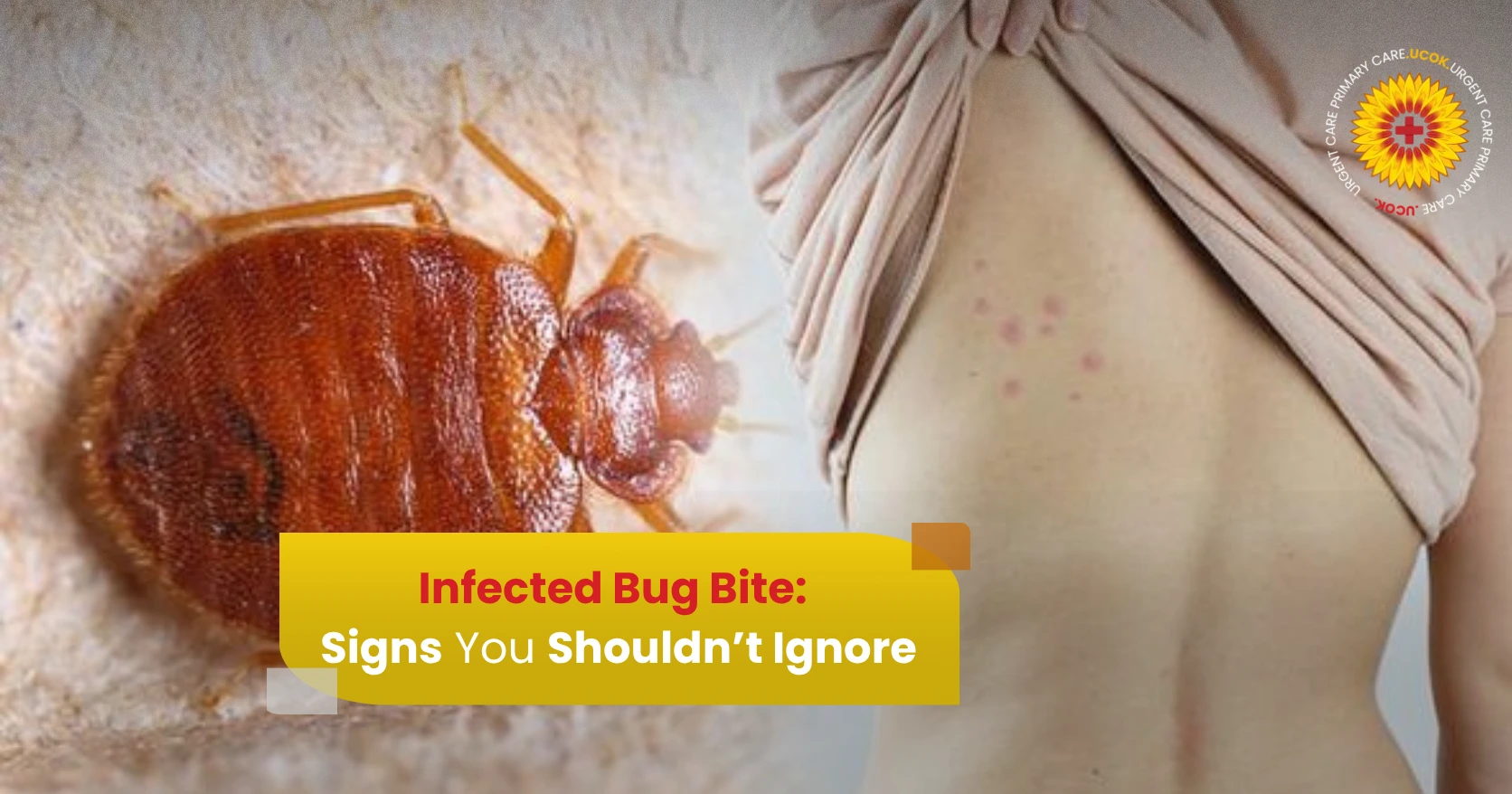
Bug bites are a regular part of outdoor life in Kansas, whether from mosquitoes in the evening, ticks on a trail, or other insects that leave a small, itchy mark. Most of the time, the reaction stays mild and settles on its own. Occasionally, though, a bite can become infected, and that changes the situation.
Knowing the difference helps you respond early, reduce the chance of complications, and get the right care when it matters. This guide covers what a normal reaction looks like, the warning signs of infection, practical home steps, and when to seek professional help.
What a Typical Bug Bite Reaction Looks Like
Most bites are characterized by the local inflammatory reaction of redness, slight swelling, and itching. The area might be sore or hot for a day or two. Symptoms generally reach their peak early and then slowly taper and ease over days, with the body’s response slowly settling down.
Itching very frequently occurs and may be quite severe, so many people scratch. That scratching is one of the main ways bacteria from the skin or under the nails enter the tiny break created by the bite. A normal reaction does not leave the area of the bite and will not result in pus, an expanding red rash that continues to grow after the first few days, or cause systemic symptoms such as fever.
Once you are familiar with the usual pattern, you’ll become more likely to spot when things are heading in the wrong direction.
How a Bug Bite Can Become Infected
Bacteria normally found on the surface of the skin can penetrate to deeper layers through any break in the skin, even that caused by a bite from a mosquito, tick, spider, or other insect. This most often occurs as a result of scratching. Once the bacteria invade deep in the skin and soft tissue, between the layers, it can cause an infection called cellulitis.
Cellulitis is a bacterial infection of the skin and just beneath the skin. It may begin at the bite, then spread outwards. Other secondary infections can also occur if the area is opened up or if sores develop. Most of the time, the infection is due to common skin bacteria, but the timing and the presentation of the symptoms are different and make it distinguishable from the ordinary bite inflammation.
Signs of an Infected Bug Bite You Shouldn’t Ignore
Watch for changes that go beyond the expected early reaction:
- Redness or discoloration that continues to expand after the first couple of days instead of stabilizing or fading
- Increasing pain, tenderness, or warmth around the bite
- Swelling that worsens rather than improves
- Pus, yellow or cloudy drainage, or crusting sores
- Red streaks extending outward from the bite toward nearby lymph nodes
- Swollen or tender lymph nodes in the area (for example, in the armpit or groin if the bite is on an arm or leg)
- Fever, chills, or a general feeling of being unwell
The following symptoms indicate that it is not just an inflammatory response, but actually a bacterial infection. Infection can develop relatively rapidly; it is important to monitor the bite during the first few days. Another tip is to draw around the perimeter of the redness with a washable marker to make it easier to notice if it expands.
Keep in mind that some tick-borne diseases have other unique symptoms or rashes that occur days to weeks after the bite. Any new or enlarging circular or bull’s-eye rash following a possible tick bite must be evaluated quickly as well.
What to Do for a Mild, Non-Infected Bite at Home
For typical bites without signs of infection, simple care is usually enough:
- Clean the area gently with soap and water soon after the bite is noticed.
- Apply a cool compress to ease swelling and discomfort.
- Use an over-the-counter anti-itch cream such as hydrocortisone or calamine lotion.
- Consider an oral antihistamine if itching is bothersome (follow package directions and check with a pharmacist or provider if needed, especially for children).
- Keep fingernails short and clean, and try not to scratch. Covering the area with a light bandage can help reduce the urge.
- Avoid applying harsh substances or unproven home remedies that can further irritate the skin.
Most uncomplicated bites improve steadily with these measures.
When to Seek Medical Care
Examine the infection site for any warning signs like spreading redness, swelling, and worsening pain after a few days, pus, red streaks, fever, and swollen lymph nodes, and reach out to a healthcare provider or Urgent Care if any of these are present. If a bite appearance is concerning, children, older adults, or those with diabetes and compromised immune systems should be evaluated earlier.
If it is hard to breathe, the face or throat is swelling, or you have widespread hives or other symptoms of severe allergy, seek emergency care immediately. In addition, any rapid increase in redness and/or a fever with a lot of pain or a feeling of being extremely ill requires immediate assessment.
If you suspect you’ve been bitten and the wound is infected, urgent care is a good resource. Providers may inspect the area, decide if antibiotics and treatment are required, clean the area if needed, and provide aftercare instructions. Prompt treatment of cellulitis and other infections typically results in gradual healing and keeps the infection from spreading.
Prevention Tips That Reduce Risk
Even though you can’t avoid all insects, these tips reduce your risk of being bitten and of the bite getting infected:
- Use EPA-registered insect repellents when outside, particularly during mosquito or tick activity.
- Wear long sleeves and pants in wooded and grassy areas; treat clothing as necessary if in an appropriate condition.
- Use fine-tipped tweezers to carefully remove any ticks attached immediately after coming from the outdoors and do a tick check afterwards.
- Do not scratch bites; keep skin clean.
- Be sure to care for your skin’s overall health, especially if it has skin which is dry or broken, allowing bacteria to get in.
- Monitor and inspect children’s exposed skin after outdoor play activities and encourage them not to scratch.
These measures will be particularly beneficial in Kansas during the warmer months when the insects are most active.
Why Early Attention Matters
Most bug bites remain a minor nuisance. When infection develops, however, prompt recognition and treatment make a clear difference. Antibiotics, when needed, are most effective early, and addressing the problem before it spreads reduces discomfort and recovery time. Ignoring progressive redness, pain, or systemic symptoms can allow the infection to involve deeper tissues or, in uncommon cases, become more serious.
Our staff at Urgent Care of Kansas is trained to assess insect bite skin problems. We can differentiate it from a usual reaction and infection, provide treatment as needed, and provide information about what to monitor during the healing process. If the bite gets worse while you are looking at it or feeling it here and there, the walk-in option allows you to pick it up at your own convenience.
Final Thoughts
While you do not need to pay much attention to an itchy bug bite, an infected bite should be treated. Know the differences between expected inflammatory changes and signs of infection (redness and swelling that continue to get bigger, increased pain, increased heat, diminished function, pus, red streaks, or fever). Clean bites as soon as possible, don’t scratch, and go to the doctor if signs appear.
If you have a bug bite that doesn’t seem to be getting better, or is exhibiting worrying signs of change, contact us today and visit us at one of our locations. We’re here to look at the area, answer your questions, and provide the care that gets you feeling better and is comfortable for you so you can feel better.
The information in this post is provided for informational purposes only and is not intended to be a replacement for a medical assessment. Please seek advice from a professional health care provider if you have health concerns.
FAQs
How can I tell a normal bug bite from an infected one?
A normal reaction typically involves mild redness, swelling, and itching, which peak and improve early. After a few days, an infected bite becomes more red, painful, warm, and enlarged, accompanied by pus or red streaks, or fever.
Should I go to urgent care for a bug bite?
Yes, when spreading redness, pain, and swelling are present or increasing, and there is any sign of pus, red streaks, fever, or swollen lymph nodes. Urgent Care will be able to assess the bite and decide if you require antibiotics or any other care.
Can I treat an infected bug bite at home?
Mild inflammation can be managed at home, but a true infection usually requires medical evaluation and often prescription antibiotics. Do not rely on home remedies alone if infection signs are present.