
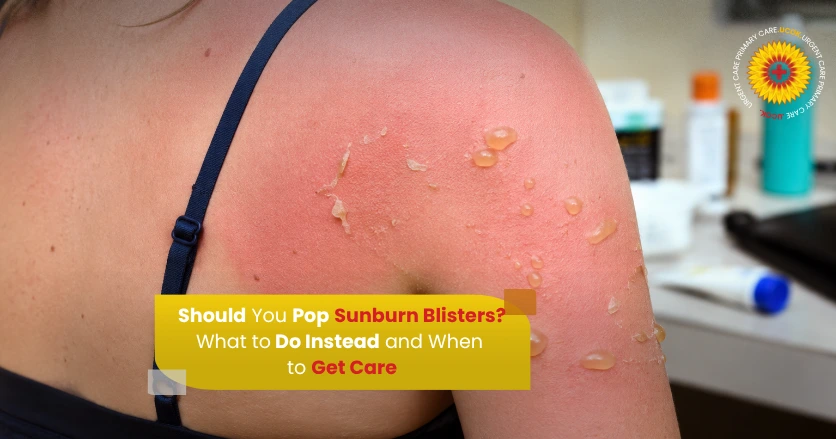
A bad sunburn is uncomfortable enough on its own. Fluid-filled blisters can be very painful when they first start to develop, and the urge to pop them is strong. Many individuals wonder if popping those blisters will help them heal faster or lessen the discomfort. In most cases, the opposite is true.
Understanding what those blisters represent, when to leave them alone generally, and when professional treatment is needed can help you heal more painlessly and prevent complications. Here are some practical things you can do at home, and indicators that are a reason to see a doctor.
What Sunburn Blisters Actually Are
Sunburn blisters happen when ultraviolet (UV) radiation damages the skin enough to cause the layers of skin to split and fluid to collect underneath. Usually this means a second-degree burn. The blister itself is not only an annoyance; it is a natural protective coating over the damaged tissue below.
The fluid inside cushions the wounded skin, aids in preventing infection, and assists healing. Blisters may emerge hours after sun exposure or the following day, generally in places that experienced the most significant UV damage. These may be little lumps or larger and more sensitive collections of fluid.
The first thing to do to manage the blister properly is to understand that it is a natural response of the body.
Should You Pop Sunburn Blisters?
Almost always the answer is no. Bursting a sunburn blister takes down the body’s natural barrier, exposing raw skin underneath and increasing the risk of infection and perhaps prolonging the healing process. It also increases the risk of scarring and permanent pain.
Dermatology guidelines always advise leaving intact blisters alone whenever possible. The unbroken skin over the blister functions as a sterile dressing manufactured by your body. And it’s an open wound, and you let the germs in.
There are certain exceptions for other kinds of blisters (such as enormous, really painful friction blisters), but for sunburn blisters the advice is clear: leave them alone and let them heal at their own pace.
What to Do Instead: Practical Home Care
Support the natural healing process of the skin; do not intervene aggressively.
Cool the skin. Cool (not cold) compresses or a lukewarm shower can lower the heat and make you feel more comfortable. Do not put ice directly on it, as excessive cold might exacerbate the tissue damage.
Drink lots of water. A significant sunburn will certainly dehydrate you. Drink plenty of water to help your body recover and to aid the healing process.
Moisturize gently. Cool your skin, then apply a light scent-free moisturizer, pure aloe vera, or a thin coating of petroleum jelly. They can take care of dryness without blocking or aggravating the region. Avoid heavy ointments or treatments containing alcohol, perfumes, or harsh chemicals.
Control pain. Over-the-counter pain medications such as ibuprofen or acetaminophen can help with discomfort and inflammation. Use as directed on packaging.
Lock down the perimeter. If the blistered skin is in an area that scrapes against clothing, keep it clean and loosely wrapped with a nonstick bandage. Keep the sun off it while it heals so it doesn’t get worse and let it heal. Wear protective clothing and seek shade.
If a blister bursts spontaneously. Clean the area gently with mild soap and water. If advised, apply a thin coating of petroleum jelly or antibiotic ointment to the wound and cover it with a clean, nonstick bandage. Don’t rip at loose skin. If needed, snip away any bits that have come away cleanly with clean scissors.
No picking, peeling, or scratching. That additional trauma can slow the healing process.
When to Seek Medical Care
Most mild to moderate blistering sunburns will respond to attentive home treatment. But some cases require professional assessment.
Think about urgent care or medical attention if you have:
- Large areas of blistering on body
- The burn impacts the face, hands, feet, a major joint or the genitals
- You develop considerable tiredness, fever, chills, nausea or dizziness
- Signs of infection including increased redness, fever, swelling, pus, red streaks or severe discomfort
- Severe pain that is not relieved with over-the-counter medication
- The person is a small child, an adult, or someone with a weaker immune system or some chronic illnesses
- Symptoms do not improve after a few days of appropriate treatment
These indicators can be indicative of a more serious burn, dehydration, or infection that requires medical evaluation. Providers are able to assess the amount of injury, control pain if needed, check for infection, and provide wound care advice.
For these issues, urgent care can be a convenient option; walk-ins are available so that you can get quick evaluation without the wait for a primary care appointment.
Prevention Tips for Next Time
The best way to prevent serious sunburn in the first place is:
- Use a broad-spectrum sunscreen with an SPF and apply generously and frequently, especially after swimming or sweating
- Seek shade at the hottest part of the day
- Wear protective clothing, a broad-brimmed hat and spectacles
- Be extra careful near water, sand or other shiny surfaces that increase the intensity of UV exposure
- Remember that cloud cover may not completely shield UV radiation
If you get these behaviors down, you’re less likely to get blistering burns and the recuperation period that goes with them.
Why Thoughtful Care Matters
If you do get sunburn blisters, leaving them alone protects the healing skin and reduces the possibility of setbacks. Add in restraint cooling, hydration, gentle moisturizing, and smart sun protection, and you offer your body the best opportunity for a smooth recovery. If the burn is bigger or if there are symptoms that worry you, getting medical help quickly can prevent complications and speed relief.
The care staff at Urgent Care of Kansas is experienced at evaluating sun-related skin problems and assisting patients in determining what they should do next, whether that’s reinforced home care guidance or further treatment with walk-in access. Convenient locations and walk-in access make it easier to address concerns before they escalate.
Final Thoughts
Sunburn blisters are a clear sign that the skin has been severely harmed. The best answer is typically patience and supportive care rather than popping. The protective fluid-packed covering is doing a valuable job. Cool the skin, drink plenty of fluids, gently moisturize, protect the region, and look for warning signals that require professional care.
Have a bad sunburn and not sure about the severity or what to do next? Contact us and see us at one of our Urgent Care of Kansas locations. We are here to help you, answer any questions you may have, and help you to recover in comfort.
This article is for educational purposes only and is not a substitute for professional medical advice. If you have any health issues, please get in touch with a medical professional.
FAQs
Why do sunburn blisters form?
They occur when UV damage is severe enough to split the skin layers and allow fluid to collect, forming a natural protective barrier over the wounded tissue.
How long do sunburn blisters usually last?
If they are intact and well cared for, blisters often improve within a few days and resolve as the skin underneath heals, usually within a week or so. Avoiding further trauma aids the process.
What if the blister pops on its own?
Gently clean the area with gentle soap and water, apply a thin layer of protective ointment if indicated, and cover with a clean nonstick dressing. Continue to protect the skin against the sun and against irritation.
When should I go to urgent care for a sunburn?
Seek assistance if blisters cover a wide area, include sensitive places like the face or hands, or if you develop fever, evidence of infection, severe pain, or other systemic symptoms. Early examination can help avert complications.