
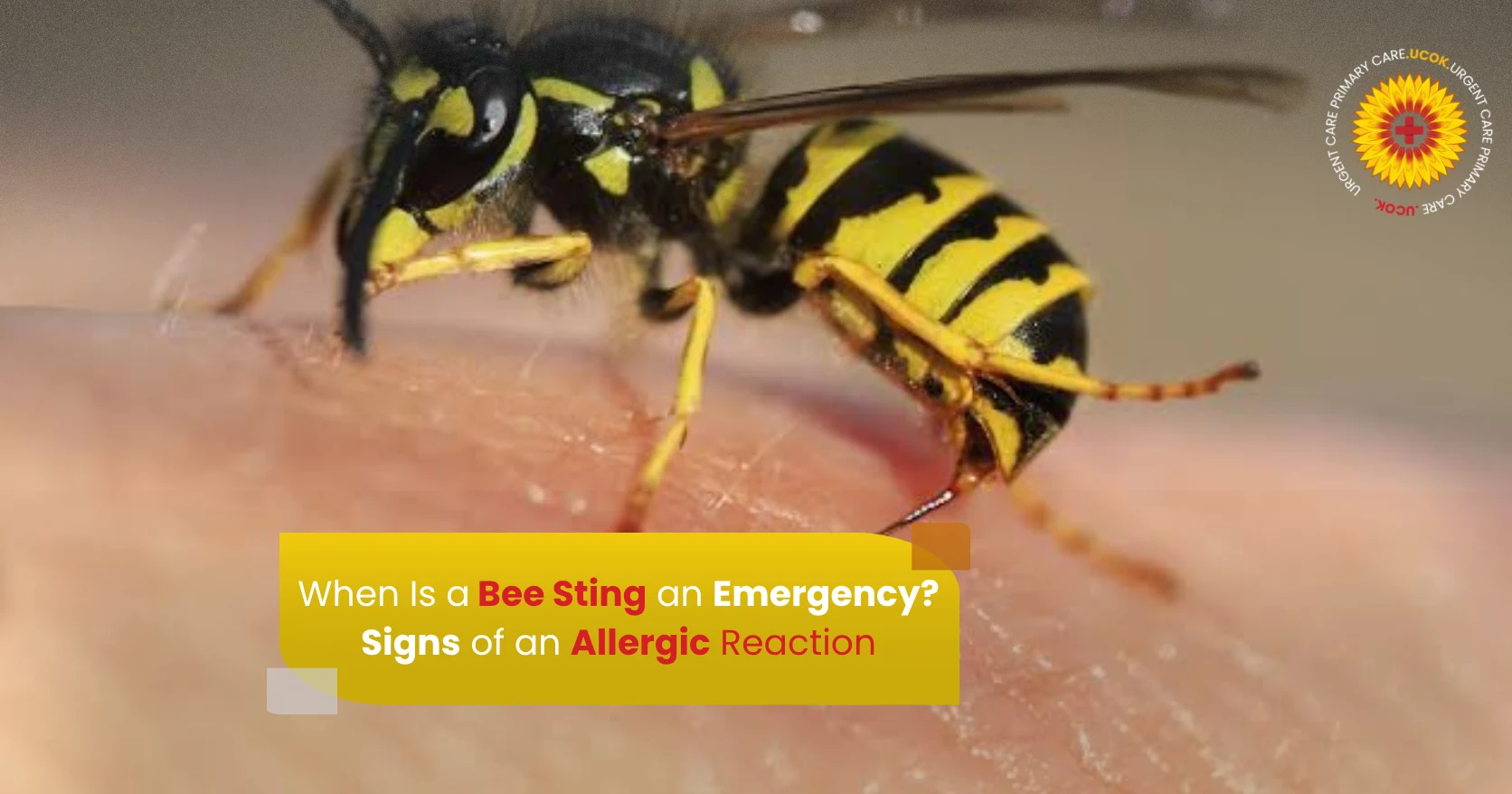
Summer is the season of bee stings. Most bee stings result in temporary pain, swelling, and itching, but some can cause severe allergic reactions that require prompt medical attention.
Understanding the difference between a normal reaction and an emergency helps you respond quickly and protect your health. In this post, we will explore how to tell if you are having a reaction to a bee sting, how to treat moderate symptoms at home, and when to get medical attention.
Understanding a Typical Bee Sting Reaction
When a bee stings, it injects venom into you. This venom induces a local reaction. The usual response of most people is localized: a severe, scorching pain exactly at the spot, redness, a little swelling, and itching. The region may be elevated and seem like a small welt, often with a small white spot where the stinger entered.
This reaction is the body’s normal response to the foreign material in the venom. The swelling and discomfort normally peak the first day or so and progressively subside over the next few days. It stays local to where you’ve been stung and doesn’t go through your body. For the vast majority of people, it is uncomfortable but not dangerous and can be readily handled at home.
Signs of a Mild to Moderate Allergic Reaction
In other people, the response is more vigorous, but still local, and is called a large local reaction. Swelling can spread several inches beyond the sting and stay longer, sometimes a week. It can feel hot, look quite red, and itch a lot.
This sort of reaction is more the immune system going into overdrive in response to the venom, rather than a full-blown allergy. The magnitude of the swelling can be disconcerting (particularly on the face or hand), but normally other regions of the body are not involved. Over-the-counter antihistamines and cold compresses can often help. However, if the swelling is stopping you from moving a joint or disrupting your everyday life, it is advisable to get it looked at.
Recognizing Signs of a Severe Allergic Reaction (Anaphylaxis)
That is when a minor sting might become a problem. Anaphylaxis is a severe full-body allergic reaction that can occur rapidly, usually within minutes to an hour after the sting. This is an emergency that can affect breathing, blood pressure, and other critical processes and requires urgent care.
Some major warning indicators include:
- Hives or widespread itching away from the sting site
- Lips, tongue, eyelids, or throat swelling
- Trouble breathing, wheezing or chest tightness
- Feeling weak, woozy, or losing consciousness
- Nausea, vomiting, abdominal cramps or diarrhea
- Weak or fast pulse or rapid decline in blood pressure
If a bee stings you or someone else with you, and you have any of these symptoms, get emergency medical help: Anaphylaxis can happen fast, and early treatment can make a big difference.
When to Seek Emergency Care or Visit Urgent Care
Minor stings usually do not need professional medical attention. But go to urgent care or the emergency room if:
- Any signs of an allergic reaction spreading or anaphylaxis
- Swelling of face, lips, or throat; extreme swelling
- You have had an adverse reaction to stings in the past
- Symptoms do not improve with home treatment
- Many stings have happened, especially among children or the elderly
If you suspect anaphylaxis, call 911 immediately instead of driving yourself. If feasible, lay the victim down with their legs raised, keep them calm, and wait for aid to arrive. Loosen any tight clothing. If they have a prescribed epinephrine auto-injector, use it right away as indicated.
If your reaction is moderate, or you’re not sure how serious it is, urgent care is a great choice. Our experts can examine you, provide relief, and determine whether you need to see someone else.
Practical First Aid for Bee Stings
Quick treatment of a sting can ease pain and avoid complications:
- Remove the sting: Carefully scrape it out with the edge of a credit card or fingernail. Avoid squeezing it, which can release more venom.
- Keep the area clean: Wash with soap and water; this may help prevent infection.
- Use something cold: For pain and swelling, use an ice pack wrapped in a cloth for 10 to 20 minutes at a time.
- What to use: An over-the-counter antihistamine may help with irritation and swelling. A mild painkiller and hydrocortisone cream may help too.
- Raise it if necessary: If the sting is on an arm or leg, raise that limb to help reduce swelling.
Don’t scratch the area, as this can lead to infection, and check for symptoms for the first few hours.
Prevention Tips to Reduce Your Risk
You can’t avoid every bee, but these steps lower your chances of stings:
- When you are out in the open, select light-colored, smooth materials, as bees do not like them.
- Avoid wearing strong perfumes or fragrant lotions, or colorful flowered clothes that may attract bees.
- Watch out for blossoming plants, garbage cans, and picnic places.
- Cover your food and drinks when outdoors.
- If you know you are allergic, carry your epinephrine auto-injector and wear a medical alert bracelet.
Teach youngsters bee safety basics: don’t panic, walk away gently, don’t swat.
For those who have had allergies, consulting with an allergist on testing and perhaps immunotherapy (allergy shots) can considerably reduce future risks.
Why Knowing These Signs Matters
Bee stings are usually only a nuisance, and preparation can turn any concern into confidence. Knowing the difference between a normal reaction and something more serious will help you react quickly when it matters, whether that’s in terms of basic home care or seeking rapid medical attention.
At Urgent Care of Kansas, we’re here for you during those unexpected moments. With facilities that are easy to access and walk-in availability, you can get the treatment you need, when you need it, whether it’s a worrying sting or any other health issue.
Final Thoughts
It’s one of life’s simple joys to enjoy the outdoors in Kansas, and a little information goes a long way toward keeping those experiences safe and entertaining. Watch how your body reacts after a sting, act fast if something feels wrong, and don’t hesitate to get care if you are concerned.
If you or a family member has been stung by a bee and is not feeling well, stop in at one of our Urgent Care of Kansas locations. We are here to listen, assess, and help you feel better. Be safe out there this season.
This material is for informational purposes only and does not replace professional medical advice. Always seek the advice of a qualified healthcare provider with any questions you may have regarding a medical condition.
FAQs
How long after a bee sting can a reaction occur?
Most severe reactions happen within minutes to an hour, though some symptoms can develop over several hours. Monitor closely during this window.
Can you develop a bee sting allergy later in life?
Yes. Even if previous stings were mild, your immune system can change over time, so any new or worsening symptoms should be taken seriously.
What should I do if I get stung and don’t have an EpiPen?
Remove the stinger, use home remedies for mild symptoms, and seek medical care right away if any concerning signs appear. Don’t wait if breathing or swelling issues develop.