
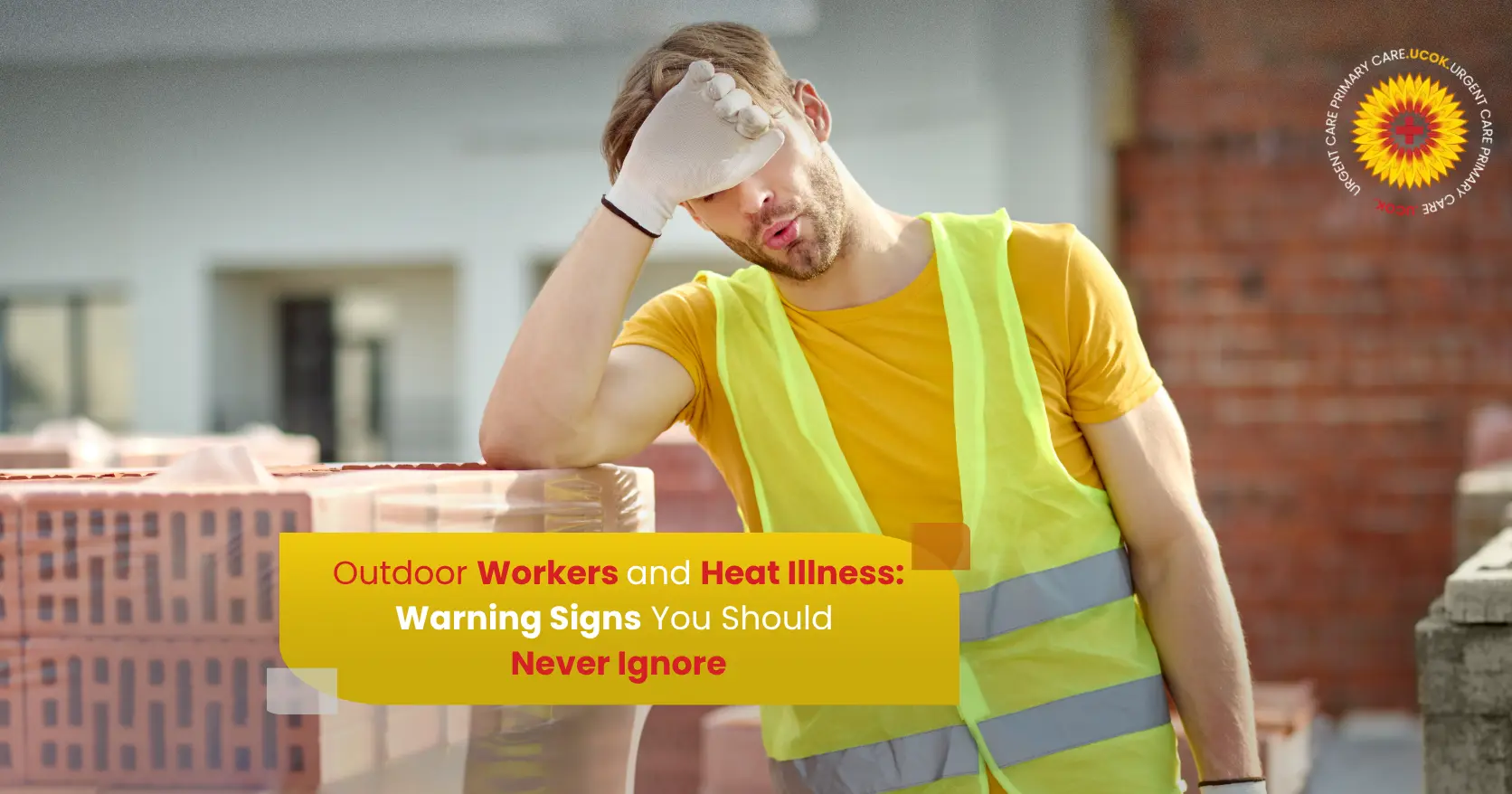
Working outdoors in the heat of the Kansas summer can be physically demanding and increase your risk of heat-related illness. If you’re in construction, landscaping, agriculture, or road maintenance, it’s important to know the early warning signs. At Urgent Care of Kansas, we help outdoor workers identify, treat, and prevent heat-related illnesses so they can remain safe on the job.
Understanding Heat Illness in Outdoor Work
Your body is pretty good at temperature regulation. When you sweat, and your blood flow to your skin increases, but in hot, humid weather, especially when combined with physical activity, heavy clothing, or direct sun, those cooling systems can be overtaxed. Heat illness is not just feeling a little warm. It is a progressive condition that can range from mild discomfort to life-threatening emergencies.
Outdoor workers are more vulnerable because they often can’t get away from the elements. Things like high humidity, poor air movement, and long hours without adequate breaks make it harder for the body to cope. The good news is that most cases can be prevented with awareness and simple steps.
Common Types of Heat-Related Illness
Heat illness can take many forms and can build on each other if not treated.
Heat Rash and Heat Cramps: These are typically the first warnings. Heat rash shows up as red, itchy bumps where sweat gets trapped. Heat cramps involve painful muscle spasms, usually in the legs or abdomen, caused by loss of too much salt and fluids in sweat.
Heat exhaustion: This is more serious and occurs when you lose too much water and salt from your body. You may feel weak, dizzy, or sick and suffer from heavy sweating and a rapid, weak pulse. Your body is sending up a red flag that it’s under the gun.
Heat Stroke: This is the most advanced and serious stage. Your body temperature rises dangerously high, and cooling systems start to fail. It may cause confusion, seizures, or loss of consciousness and requires immediate emergency care.
Knowing where you or a colleague may lie on this continuum helps you respond quickly.
Warning Signs You Should Never Ignore
Watch for physical and mental changes, which may occur suddenly or develop over time.
Early Signs to Watch For: Heavy sweating, thirst, headache, muscle cramps, dizziness, fatigue, or nausea. Heat exhaustion is characterized by cool, clammy skin and a rapid but weak pulse. These are signals to stop, rest, and cool off immediately.
More Serious Red Flags: Confusion, slurred speech, irritability, or strange behavior are signs of worsening problems. This is heat stroke territory when sweating stops, and the skin feels hot and dry (or in some cases stays very moist), or the body temperature rises and someone faints or has a seizure.
Signs That Affect the Whole Body: Watch for a fast heartbeat, vomiting that prevents you from keeping fluids down, extreme weakness, or dark urine (which can be a sign of muscle breakdown). Especially, mental changes are important because they show that the brain is being affected.
Trust your gut and your coworkers’ gut. Stop if it doesn’t feel right. Better to do that than push through, especially on a hot day.
When to Seek Medical Attention
Mild symptoms usually get better with rest and fluids, but don’t take a chance.
Seek Urgent Care When: Symptoms like dizziness, nausea, or cramps don’t improve after moving to shade, cooling down, and drinking water for about an hour. If you have severe cramps, persistent vomiting, cannot keep fluids down, or are getting weaker, you need professional help. Urgent care can give IV fluids, monitor, and make sure it doesn’t get worse.
Call 911 immediately for signs of heat stroke, such as confusion, hot, dry skin, seizures, loss of consciousness, or extremely high body temperature. If you can’t get help right away, move the person to a cool place and cool them down aggressively with water, wet cloths, or ice packs. Do not give fluids if the person is unconscious.
If symptoms are severe, do not try to drive yourself or a coworker. Quick action can save lives and prevent permanent damage.
Practical Prevention Tips for Outdoor Workers
It is always better to prevent than to treat. Here’s how you can protect yourself and your team:
Hydrate: Drink water throughout the day; don’t wait until you feel thirsty. Do small amounts frequently. Drinks that contain electrolytes can be helpful if you’re sweating a lot, but avoid ones with caffeine or alcohol, as these can increase dehydration.
Gradual Acclimatization: If you are new to the heat or it’s early in the season, work into longer or harder periods of work over a week or two. Your body adapts to it better.
Dress Smart and Take Breaks: Use light-colored, loose, breathable clothing and a wide-brimmed hat. Please schedule heavy tasks for the cooler parts of the day. Rest frequently in shaded or air-conditioned places. Adopt the buddy system so colleagues can watch each other’s backs.
Monitor the Environment: Look out for heat index forecasts (which account for humidity). On days that aren’t extremely hot, high humidity can make it harder for sweat to evaporate. Employers must offer shade, water, and rest schedules.
Lifestyle Factors: Get good sleep, eat balanced meals, and be aware of risk factors such as medications or health conditions, such as heart issues or being overweight. Never leave anyone in a hot car.
Why Quick Action and Awareness Matter
Heat illness can develop quickly, but the vast majority of cases are preventable with common-sense steps and a culture of safety. Being alert at work isn’t just about you; it’s about your entire crew and family who are relying on you to come home safe.
At Urgent Care of Kansas, we know what the work outside in our area entails. Our team is here for walk-in care for heat concerns, hydration support, evaluation, and guidance so you can recover and get back to doing what you do best.
Kansas summers are beautiful, but they are also demanding. Being aware of the symptoms of heat illness and taking preventative measures will keep you and your team safe while enjoying the outdoors. Don’t ignore those early warning signs; your body is trying to tell you something.
If you or someone you work with has symptoms that are of concern to you, please visit one of our Urgent Care of Kansas locations. We’re ready to deliver compassionate, efficient care. Stay safe, stay cool, and take care out there.
The content of this post is not intended to be a substitute for professional medical advice, diagnosis, or treatment. Always consult your health care professional regarding any health concerns.
FAQs
What are the early signs of heat illness?
Early symptoms may include heavy sweating, thirst, headache, muscle cramps, dizziness, or fatigue. Heat exhaustion is common with cool, clammy skin and weakness.
How can I tell if I have heat exhaustion or heat stroke?
Heat exhaustion often involves heavy sweating and cool, clammy skin. Heat stroke usually involves hot, dry (or very moist) skin, confusion, and a very high body temperature, and should be treated as an emergency.
When should I go to urgent care for heat-related symptoms?
If, after resting and hydrating for about an hour, you’re still feeling dizzy or nauseous, have cramps, or can’t keep fluids down, visit urgent care.