
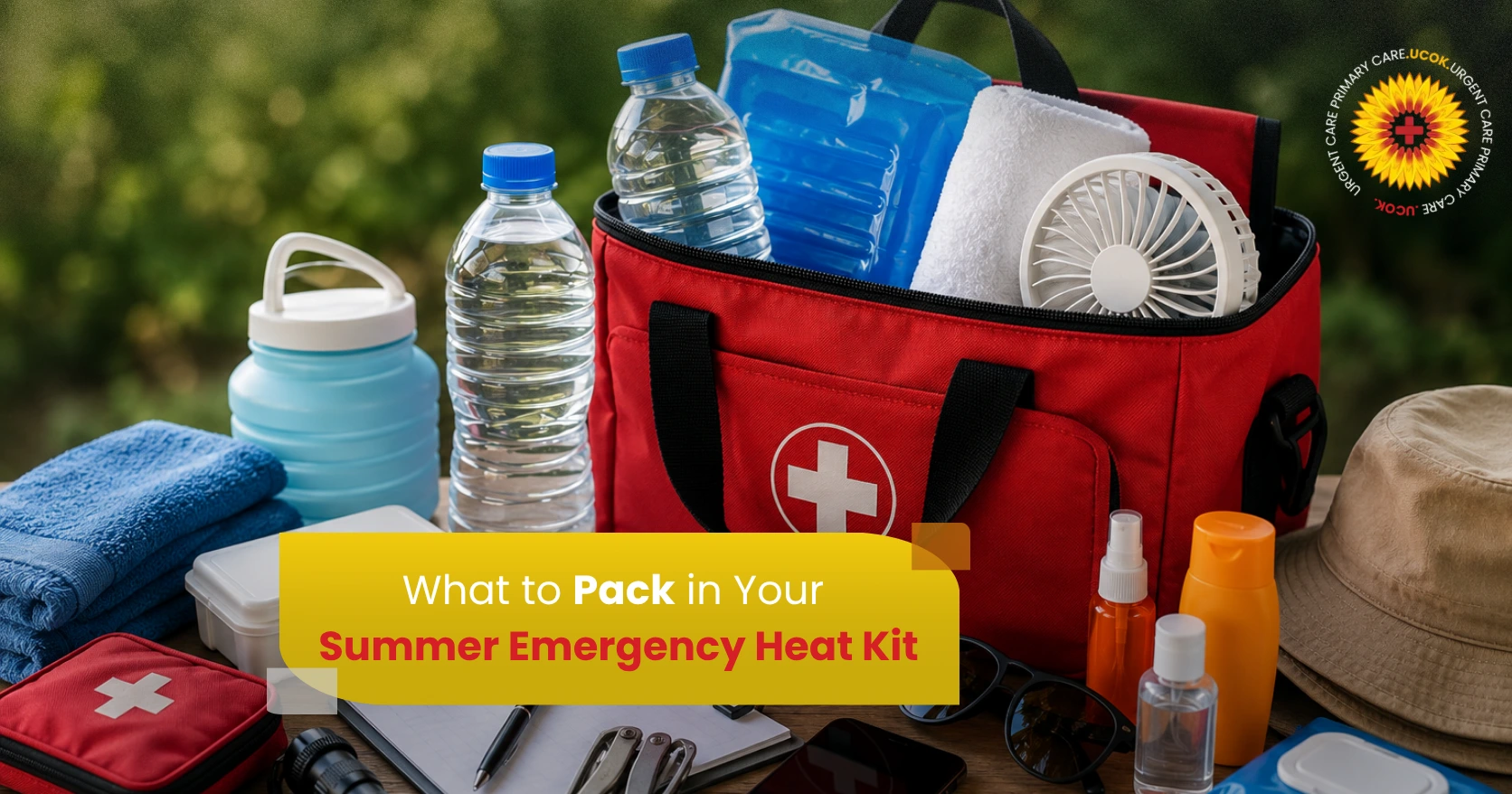
Summers are great for outdoor fun, but rising temperatures and humidity can quickly lead to heat-related illnesses. Whether you’re spending the day at the lake, at a sporting event, or working outside, a summer emergency heat kit can help keep you safe. At Urgent Care of Kansas, we’ve compiled this fast guide to the basics you need to keep yourself and your family safe throughout the hottest days of the season.
Why a Summer Heat Emergency Kit Matters in Kansas
Kansas summers can get you with temperature and humidity spikes that make it tougher for your body to cool off. When the air is thick, and your body is working overtime to regulate its temperature, problems like dehydration or heat exhaustion can develop more quickly than you might think, particularly if you’re exercising outside, working in the sun, or caring for kids and older folks.
A specific heat kit isn’t about bracing for the worst. It’s about easy prep work that gets you ready to respond in a flash if someone starts feeling off. First, the aim is to prevent, then to manage mild symptoms before they get out of hand. This type of preparedness prevents small discomforts from becoming a trip to urgent care, but we’re always here if you need us.
Understanding Common Heat-Related Risks
Before you pack, it helps to know what you’re prepared for. Heat exhaustion is commonly marked by profuse perspiration, weakness, disorientation, headache, nausea, or muscular cramps. Even in the heat, your skin may be cold and clammy. Heatstrokeis a major problem if things continue as they are, with confusion, very high body temperature, or skin that feels hot and dry.
Those at greater risk include children, older relatives, anyone working outside, and those with specific health conditions. The good news is that in many cases, early rest, cooling, and drinking can immediately relieve these conditions. Your kit is there to help with that.
Essentials to Include in Your Home and Car Heat Kit
Think of your equipment as a portable safety net that may be stored at home, in the car, or taken on outings. Find something lightweight, robust, and that isn’t going to take up much room, yet will be really useful when called upon.
Hydration Supplies
Take along some refillable bottles or a fold-up jug so you can refill. Plain water may not be sufficient to restore balance after heavy sweating, and hence packets of electrolyte replacement powder or tablets are also advisable. You can also find a few sports beverages in shelf-stable packaging that can provide rapid energy and mineral support during prolonged activity.
Cooling and Sun Protection Tools
But when someone is too hot, water-activated cooling cloths, compact battery-operated fans or misters, and rapid cold packs provide fast relief. Be sure to pack broad-spectrum sunscreen, a wide-brimmed hat, light-colored, lightweight long-sleeve clothing, and sunglasses to protect yourself from the sun. These filter off dangerous rays and keep your body cooler for longer.
Basic First Aid and Comfort Items
Pack a small first aid kit containing bandages, antiseptic wipes, aloe gel for sunburn, and over-the-counter pain medicines for headaches or muscular aches. A digital thermometer to take temperatures, gloves, and any personal prescriptions (e.g., allergy meds, inhalers if necessary). A little towel or rag to dampen for cooling the neck and forehead works surprisingly well.
Monitoring and Emergency Extras
A fully charged cell phone battery and charger keep communication open. Add a whistle to summon aid, a notebook with emergency contact information (including your local urgent care), and a small weather radio or app suggestions for checking heat advisories. Non-perishable foods (nuts, granola bars) offer rapid energy without heat stress.
Special Considerations for Families and Pets
If you are bringing kids or grandkids, pack kid-appropriate electrolyte alternatives, additional hats, and familiar comfort items. If you bring pets, pack a travel water dish, a cooling mat (if you have one), and alternatives for shade. Making the kit functional is adjusting it to your group.
Learn more: Staying Safe in the Summer Heat-Urgent Care of Kansas.
How to Build and Maintain Your Kit
Start simple: Assemble what you currently have at home and add a few targeted purchases. Use a clear waterproof bag or a compact pail that’s easy to pick up. Check your kit at the beginning of each summer (and after any use) to replace expired sunscreen, pills, or batteries. Keep in a cool, convenient place to keep the contents effective.
Practical Tip: Make a laminated list of what’s in the kit so that all family members know what’s in it and how to utilize it. Practice a few items on a normal day to get comfortable so you’ll be ready for a genuine crisis.
Smart Prevention Tips to Use Alongside Your Kit
Packing supplies are just one part of the picture. Drink water regularly before you feel thirsty. Take breaks in shade or air-conditioned locations. When possible, schedule outdoor time for early morning or evening. Wear loose, lightweight clothing and avoid large meals or drinking in extremely hot weather.
Pay close attention to how you feel and how people around you seem. If someone looks particularly weary, dizzy, or stops sweating in excessive heat, transport them immediately to a cooler place, offer fluids, and utilize cooling techniques from your kit.
When to Seek Help at Urgent Care
Your kit is for mild symptoms, but there are times you need to see a doctor.
Visit us if you get symptoms such as prolonged vomiting, confusion, fainting, chest pain, or a very high body temperature. We can rapidly evaluate heat issues with our on-site testing and treatment so you can go back to feeling better without waiting in a long emergency hospital line.
Whatever you need, from heat exhaustion to the common summer maladies such as dehydration or minor burns, our experts at Urgent Care of Kansas can assist with all of it. No appointment needed; we want to help you get back to enjoying summer.
Putting together a summer emergency heat kit is one of those little tasks that provides great peace of mind. It shows you care about safety and helps everyone in your circle do the same. Pairing-wise supplies with everyday preventative habits can help you make the most of Kansas’s lovely warmer months.
If you ever need advice, care, or want to pop in and discuss being healthy this season, stop by Urgent Care of Kansas. Because when it matters most, we’re happy to provide compassionate, convenient care to our communities.
Stay cool out there, and here’s to a safe and memorable summer!
This information is for educational purposes only and is not a substitute for professional medical advice. Talk to a healthcare provider for personal health concerns.
FAQs
What are the initial indicators of heat exhaustion?
Heavy perspiration, dizziness, headache, nausea, weakness, and muscular cramps are common early symptoms. Cool, moist skin is common, too.
Can children and pets use the same heat safety items?
Many goods work for the whole family, but choose child- and pet-friendly versions (such as gentler electrolytes or pet-safe cooling equipment) and watch attentively.
When should I go to urgent care instead of using the kit?
Get emergency help if you have confusion, keep vomiting, faint, do not sweat when in intense heat, or symptoms get worse or do not get better with rest and cooling.
Is a car heat kit different from a home one?
A version for the automobile should be about mobility, extra water, and things like a parasol or a battery charger for roadside emergencies.