
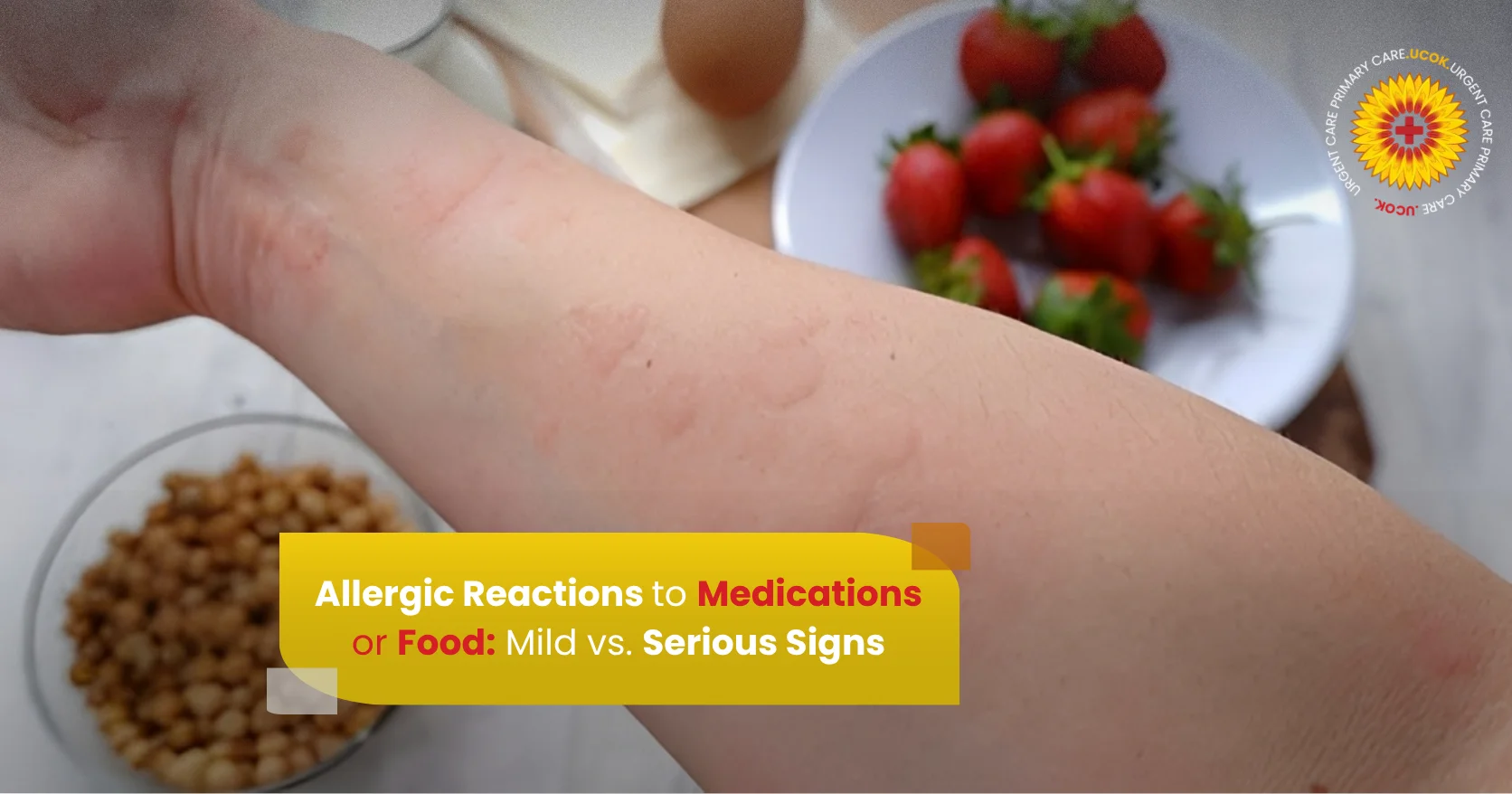
Itchy rash after taking a new antibiotic. Hives that develop after eating something unexpected. These can be frightening experiences, and many people are unsure whether this is something they can handle at home or if it is a sign that they need to seek medical help immediately. Adverse reactions to medications and foods may be mild and irritating or severe and life-threatening.
At Urgent Care of Kansas, we evaluate patients dealing with these concerns regularly. Knowing the difference between mild and serious reactions helps you respond appropriately, keep yourself or a loved one safe, and determine when urgent care or emergency services are the right choice. This guide explains the signs, gives you concrete actions to take, and makes you feel more prepared.
Understanding Allergic Reactions to Food and Medications
Allergic reactions occur when the body’s immune system identifies a substance like a food protein or medication as dangerous and goes into overdrive. Common food triggers are peanuts, tree nuts, shellfish, milk, eggs, soy, wheat, fish, and sesame. Common culprits in medication allergies include antibiotics, especially the penicillin-type, some pain relievers, such as aspirin or ibuprofen, and other prescription or over-the-counter medications.
Reactions can start within minutes of exposure; others may take hours to show up. Some bad reactions are not really allergies. Some people experience side effects or intolerances that appear similar but do not involve the same immune response. Nevertheless, any new or unanticipated symptom after food or medicine ingestion warrants attention.
Mild Allergic Reaction Signs
Mild reactions typically involve only one part of the body or one body system, and do not affect breathing or circulation. Some common signs are:
- A few hives or an itchy, raised rash in one spot
- Slight redness of the skin or flushing
- Mouth, lip, or eye itching
- Mild swelling of the lips or eyes
- Sneezing or runny nose; watery eyes
- Stomach discomfort (mild), mild nausea or bloating
- Slight cough or mild throat irritation, without breathing difficulty
These symptoms are uncomfortable, but usually not dangerous on their own. Usually, they are managed with over-the-counter antihistamines and close observation. Even mild symptoms should be watched very carefully, as sometimes reactions can escalate.
Serious Allergic Reaction Signs (Anaphylaxis)
Anaphylaxis is a serious allergic reaction, a medical emergency. Severe symptoms in one system, especially the airway or circulation, or involvement of two or more body systems is often associated with it. Possible warning signs are:
- Hives over a large area or severe itching over a large area of the body
- Severe swelling of the lips, face, tongue or throat
- Shortness of breath, wheezing, difficulty in breathing or a sensation of tightness in the chest or throat
- Voice change, difficulty swallowing, or hoarseness
- Constant coughing or noisy breathing
- Severe stomach pain; persistent vomiting or diarrhea
- Dizziness or lightheadedness, fast or weak pulse, or sudden drop in blood pressure
- Confusion, fainting, or a sense of impending doom
- Pale or blue skin, especially around the lips or fingernails
Any combination of skin symptoms with breathing difficulty or circulatory problems signals anaphylaxis. Symptoms of cardiovascular problems, such as dizziness or collapse, are always serious. Reactions can escalate rapidly, sometimes within minutes.
What to Do for a Mild Reaction
For mild symptoms that are only in the skin or mild discomfort in the nose/stomach without any breathing problems:
- If feasible, stop exposure to the suspected food or medication.
- Take an over-the-counter antihistamine following the package directions (options include diphenhydramine or a non-drowsy choice)
- Apply a cold compress to itchy regions
- Monitor closely for any worsening over the next one to two hours
- Do not reach out to the suspected trigger again
If your symptoms improve and are moderate, follow up with your health care provider or allergist for testing and long-term management. Document everything you ate or took and when symptoms started; this information aids future care.
When to Seek Urgent Care
Mild to moderate reactions that are annoying but not life-threatening are eligible for urgent care. If you have, consider a visit:
- Spreading welts or rash that causes discomfort, but your breathing remains normal
- Mild lip or face edema without throat involvement
- Persistent itching, minor stomach upset, or a new reaction you’re not sure about
- Evaluation needed, further symptom alleviation, or advice on future actions
Providers can evaluate the response and recommend or provide appropriate treatment and help determine if further follow-up is necessary. Bring a list of medications, and if you know what caused the symptoms, bring that information too.
When to Call 911 or Go to the Emergency Room
Any suspicion of anaphylaxis should be treated as an emergency. Call 911 or proceed to the nearest emergency room if you see:
- Breathing or swallowing problems
- Swelling of tongue or throat
- Tightness or wheezing in the chest
- Fainting or low blood pressure, dizziness
- Rapid development of symptoms
- Any severe multi-system involvement
If you have been prescribed an epinephrine auto-injector (such as an EpiPen), use it at the first indication of a significant allergic response and call for emergency treatment, even if you start to feel better. There can be a second reaction later; thus, observation in hospital is important.
Practical Tips for Prevention and Preparedness
- Read ingredient labels on packaged goods carefully and ask about ingredients while eating out.
- Tell all your health care providers, dentists, and pharmacists about your medication allergies.
- If you have ever had a severe reaction, wear a medical alert bracelet.
- If your doctor prescribes epinephrine for you, be sure you know how to take it.
- Create a concise written action plan for yourself or family members so that everyone knows the steps.
- Tell schools, child care providers, and activity organizers about your child’s allergies.
- Never share food or eating utensils with someone who has a known severe allergy.
The best strategy to avoid a reaction is to avoid the known triggers. Working with an allergist can help confirm actual allergies and explore options for therapy.
Why Knowing the Difference Matters
Mild responses can be treated with observation and antihistamines. Serious reactions need rapid treatment. Confusing the two or waiting too long can have serious consequences. Knowing the signs clearly helps you stay calm and act effectively.
The experts at Urgent Care of Kansas can evaluate mild to moderate allergic reactions, help to relieve symptoms, and let you know when you need to seek a higher level of care. We also make recommendations for follow-up to connect you with ongoing allergy care when appropriate. Easy walk-in access makes it easier to acquire answers when symptoms emerge.
Final Thoughts
Food and pharmaceutical allergies are unpredictable, but recognizing moderate vs. significant indications will provide you with a practical framework for responding. Treat mild, localized symptoms with care and observation. Any difficulty breathing, substantial swelling, dizziness, or multi-system involvement should be treated as an emergency. If in doubt regarding severity, get evaluated rather than waiting.
If you are having a worrying allergic reaction that does not entail serious respiratory or circulation concerns, come to one of our Urgent Care of Kansas locations. We’re ready to look at the situation, give you the right care, and help you take the next safe step.
This post is solely for educational purposes and should not be seen as a substitute for professional medical advice. If you have any worries regarding a medical condition, you should always seek the advice of a skilled healthcare professional.
FAQs
How can I tell a mild allergic reaction from a serious one?
Mild reactions are usually limited to skin symptoms (hives, itching, mild swelling) or mild nasal/stomach discomfort without breathing or circulation problems. Serious reactions (anaphylaxis) involve difficulty breathing, throat or tongue swelling, dizziness, fainting, or symptoms affecting more than one body system.
Should I go to urgent care or the ER for an allergic reaction?
Urgent care can help with mild to moderate symptoms such as spreading hives or mild swelling when breathing is normal. Call 911 or go to the ER for any trouble breathing, throat swelling, dizziness, or signs of anaphylaxis.
How can I prevent allergic reactions to food or medications?
Avoid known triggers, read labels carefully, inform all healthcare providers of medication allergies, and carry prescribed emergency medication if recommended. An allergist can help confirm allergies and develop a personalized plan.